Eugene Dunbar on how the bogs hold our history
Helen Shaw, Tóchar Stories
It’s a beautiful day to walk the Cloncrow Bog loop in Tyrrellspass, Co Westmeath, with community leader Eugene Dunbar. When you walk anywhere around Tyrrellspass with Eugene you always meet at least one or two people who stop to tell you Eugene taught them – and how much they remember and respect him. Sometimes their children, even their grandchildren, are with them. He’s a retired history and geography secondary teacher and his love of education and connecting people with the stories of the place around them is clear in his volunteer work with ETHOS, (Everything Tyrrellspass Has on Show), the community group that has become a custodian of Cloncrow Bog.
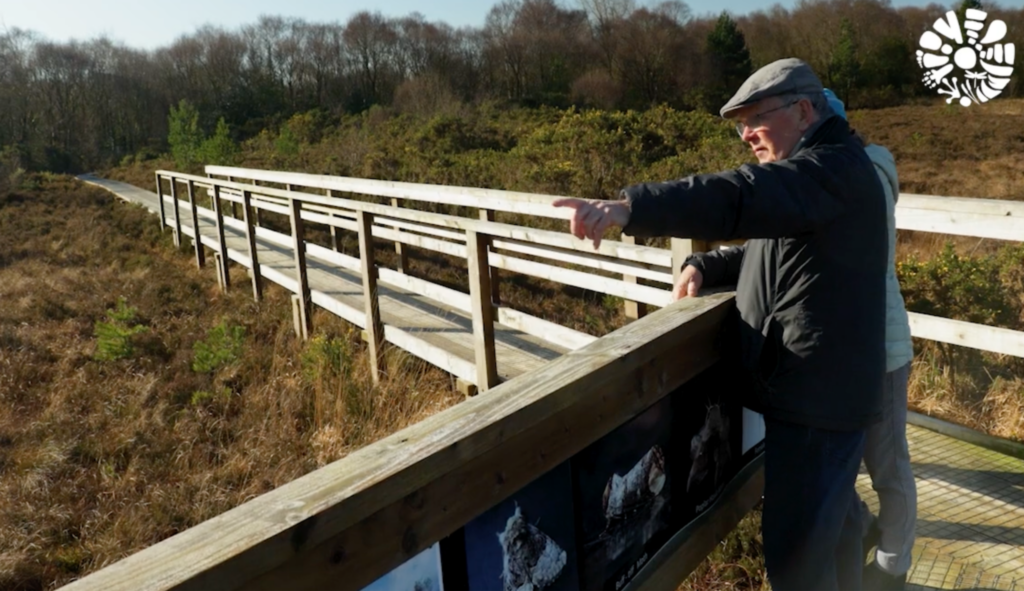
WATCH: Eugene Dunbar on the story of Cloncrow Bog
The loop from Tyrrellspass Castle through the bog and back to the village green is a walk Eugene does every day. He lives nearby with his wife Josephine who is a keen amateur visual artist.
“I just feel that great sense of peace really when I come here because you have to cherish what’s around you. It is just incredible to come down here early in the morning. You think there’s no life out in the bog, it looks like a lifeless zone, but in fact it is full of minuscule life, of tiny insect life. The colour pattern is gorgeous, actually. It is beautiful, you know. To the artist, it must be inspirational”, he says – and indeed some of Josephine Dunbar’s work captures the changing landscape of the bogland.
They are 50 years married, he tells me with a smile, with four children and 11 grandchildren, and while he is originally from Limerick he is so long rooted in Tyrrellspass and Westmeath he is a ‘local’ although turf cutting was alien to him when he arrived in the early seventies.
“I came from Limerick City, you know, where there was no such thing as bogs. And we always burned coal, and I thought there was nothing else, only coal in the world.So when I came to teach, I was just amazed. And during the summer months, there were tractors and trailers, up and down the roads. And then the whole village of Tyrrellspass was based on the bog. There’s a Bord na Móna housing estate there, and my job basically depended on the bog and the extraction of peat from the bog”.
But Eugene’s curiosity and love of nature brought him to the Irish Peatlands Conservation Council (IPCC) and a deeper understanding of the flora and fauna of the boglands – and the need to protect those habitats. Then, he says, in the 70s and 80s there was little understanding of the role the bogs and wetlands could play in storing carbon and mitigating the climate crisis – that came later.
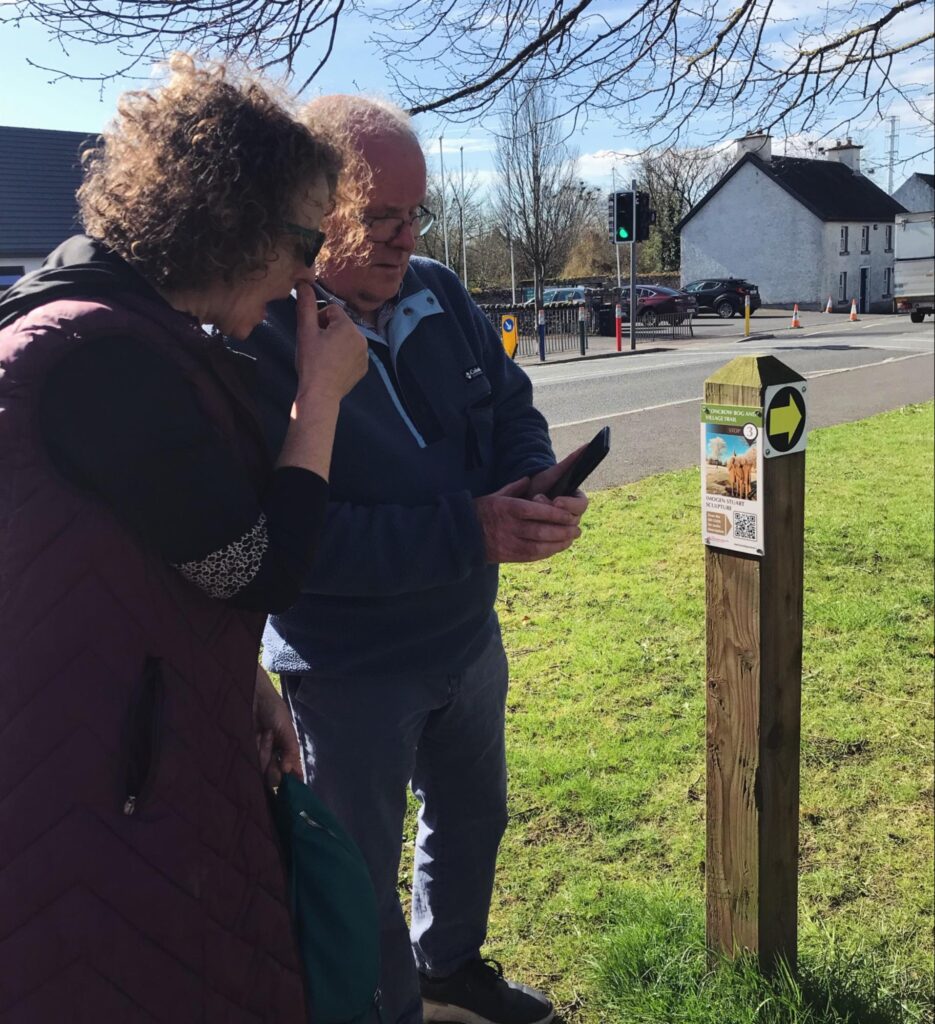
Since 2020 Cloncrow Bog has undergone significant nature restoration work enabled by the CARE-PEAT Project , an EU North-West Europe peatlands restoration scheme, and supported by ETHOS who engaged with private landowners to bring them on board. Cloncrow Bog has always been privately owned, and while families historically cut turf there, it escaped the industrial extraction of peat by Bord na Móna – seen on other depleted boglands in the region. Today Cloncrow Bog covers 234 hectares to the West with Tore Bog to the South. It is a Natural Heritage Area (NHA) and ETHOS worked to develop the 3.5km loop, connecting the Castle, bog and village and has even created a QR code audio walk you can access along the route, with local people telling the village and bog story.
In June last year Tóchar Stories, with Eugene and artist Annie Holland, partnered with St Anne’s NS in the village and worked with the children in 4th Class to create a new visual entrance for the boardwalk. Eugene brought the children into the wonders of sphagnum moss, the bog-builder, and introduced them to the tiny bog carnivorous plants like sundews while Annie mentored them on shaping their own artwork depictions of the wildlife, the plants, birds and insects, that find their home on the bog. Today, a year later, the beautiful panels with the children’s artwork, their names and the species they picked to paint, are a welcoming delight to see and a conversational point for visitors.
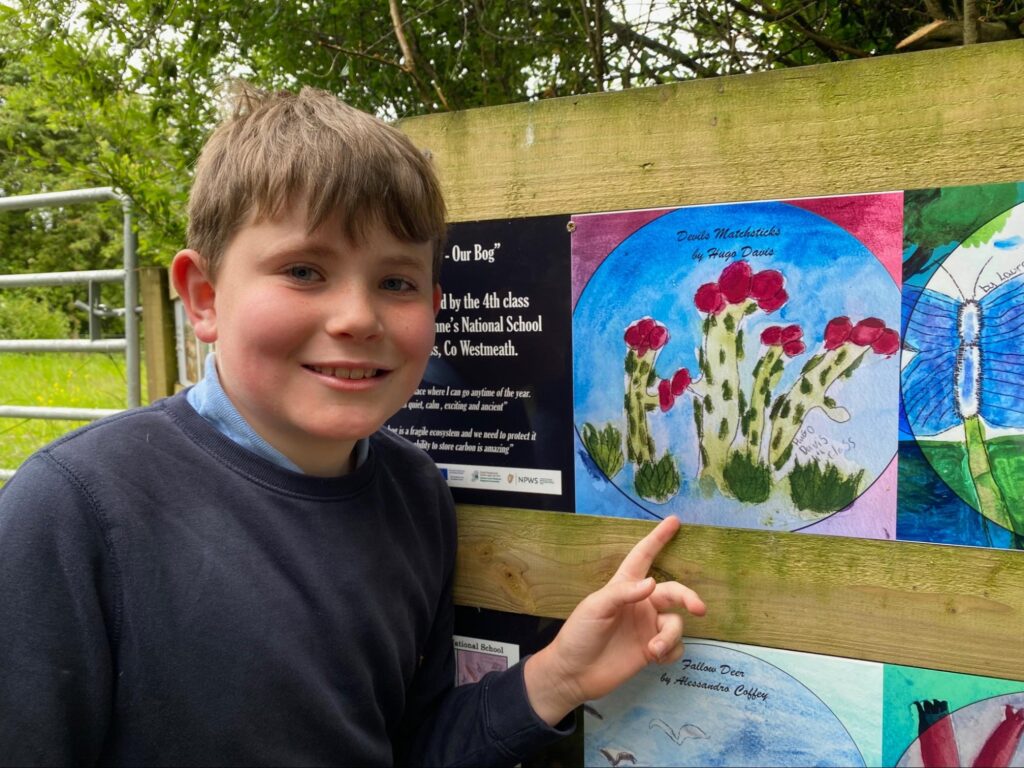
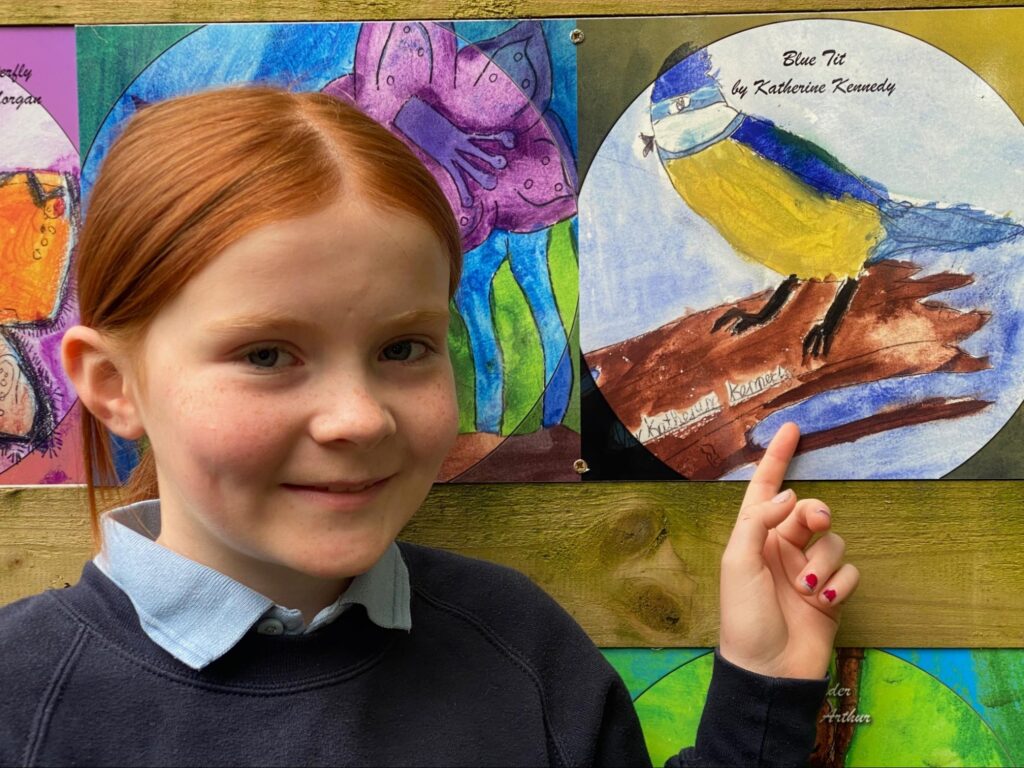
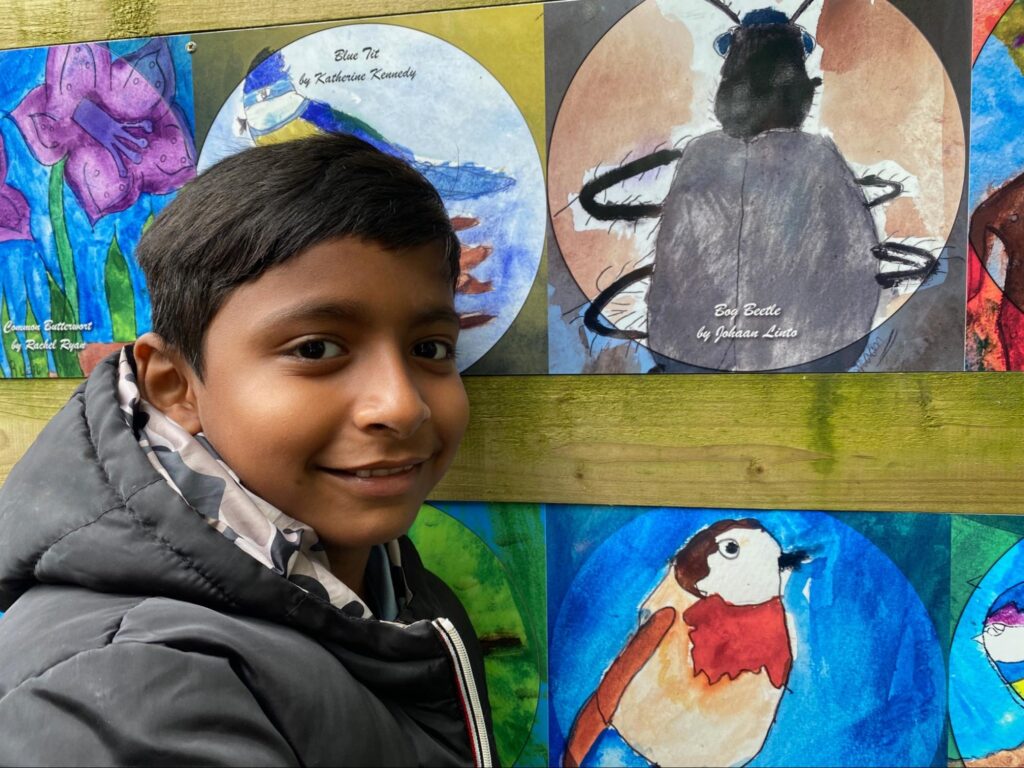
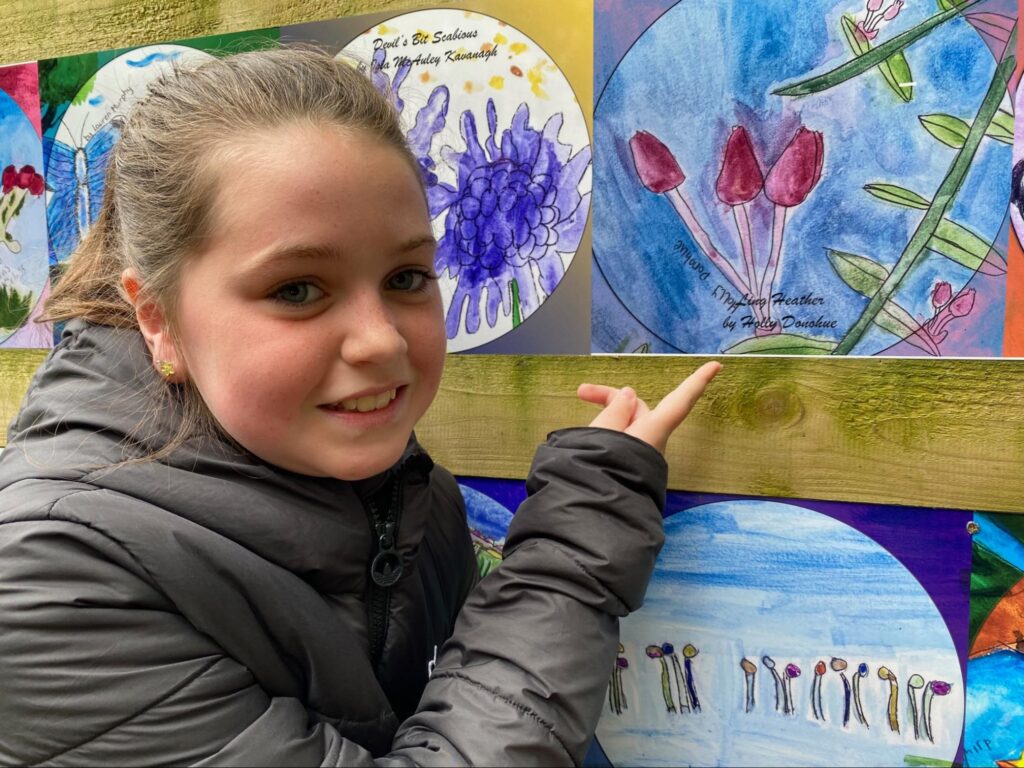
Photos: Hugo (Devil’s Matchstick) , Katherine(blue tit) Johaan (bog beetle), and Holly (Ling Heather) some of the children with their artwork on the entrance panels to the boardwalk ( photo credit Annie Holland)
For Eugene the project with St Anne’s NS, mixing bog ecology and creativity, and creating the entrance panels has been a gamechanger.
“People are amazed by it, you know, they genuinely are. And the parents, especially of the kids involved, it has spurred something with them as well. Like they’re coming down to the bog now more often with the kids. So, it has transformed the bog, in a sense, insofar as it’s no longer just a bog, it’s their bog. And it gives the children ownership of it. And I think that’s fantastic because that’s what has to be handed on. Do you know that they’re going to be the custodians, if you like, of the bog”, he says.
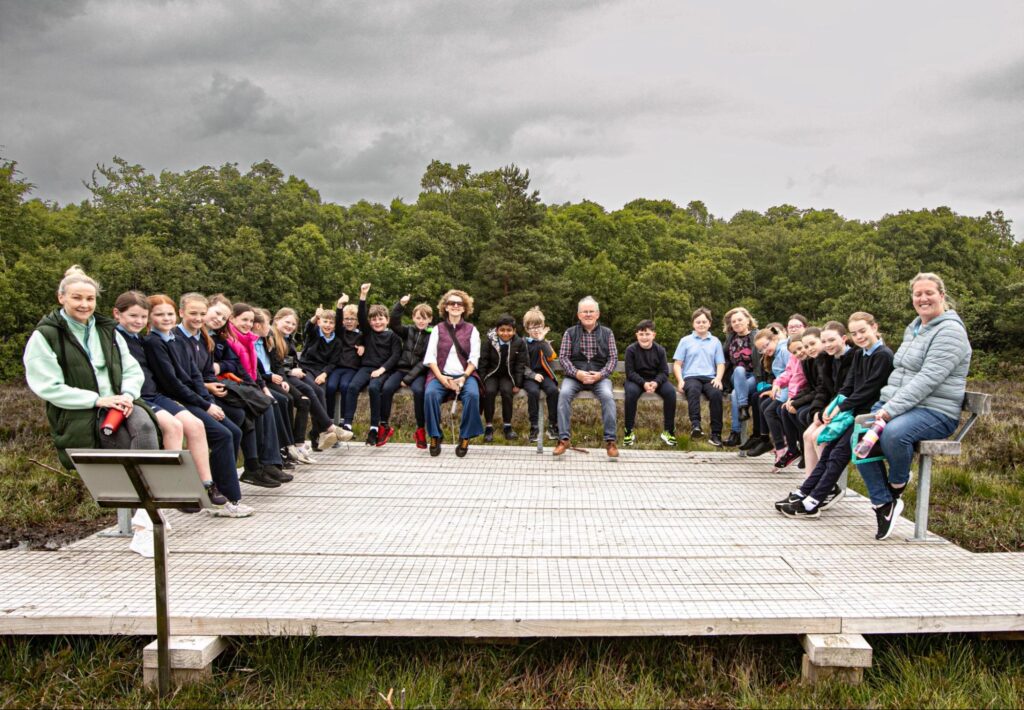
Walking the bog loop with Eugene it is clear how much of his life, post retirement has been given to this voluntary work. His photographs feature in the information panels and he has been to the forefront of ensuring research data continues to be gathered at the high bog – although the CARE-PEAT scheme finished in 2023. His combined love of history and geography, as well as the curiosity of the St Anne’s children, meant we took the children (now finishing 5th Class) to the National Museum last November to see the bog bodies.
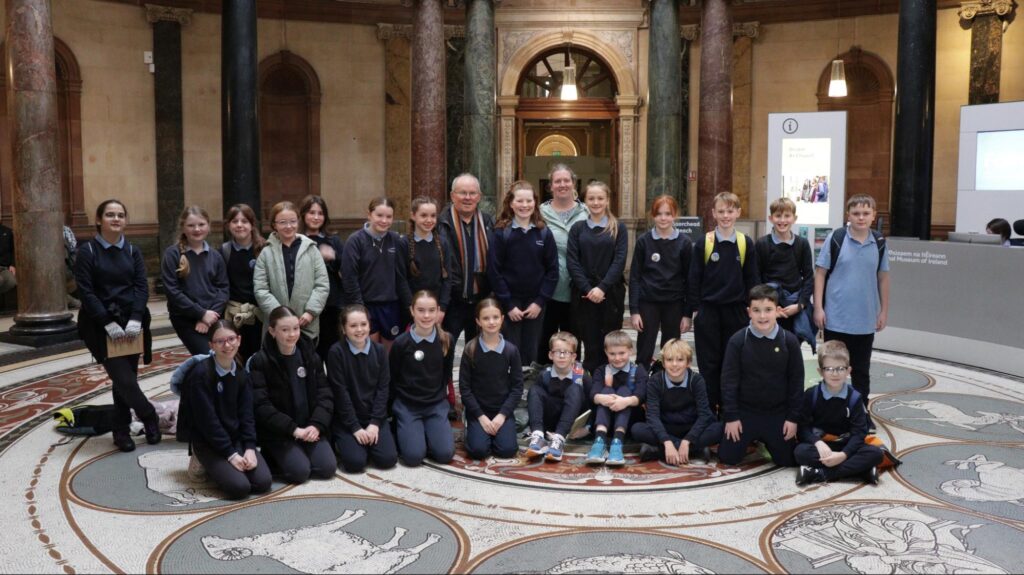
WATCH: A visit to the National Museum see the Bog Bodies
So what does this place -the bog – mean to Eugene?
“It means an awful lot to me. I spent all my life, my working life, as a history and geography teacher…and I think everything is kind of condensed in the bog. You’re looking at a landscape that is relatively untouched when it’s in its pristine condition and here is, as near as possible as you can get to being pristine,’ he says pointing out to the high bog with its history reaching back 10,000 years.
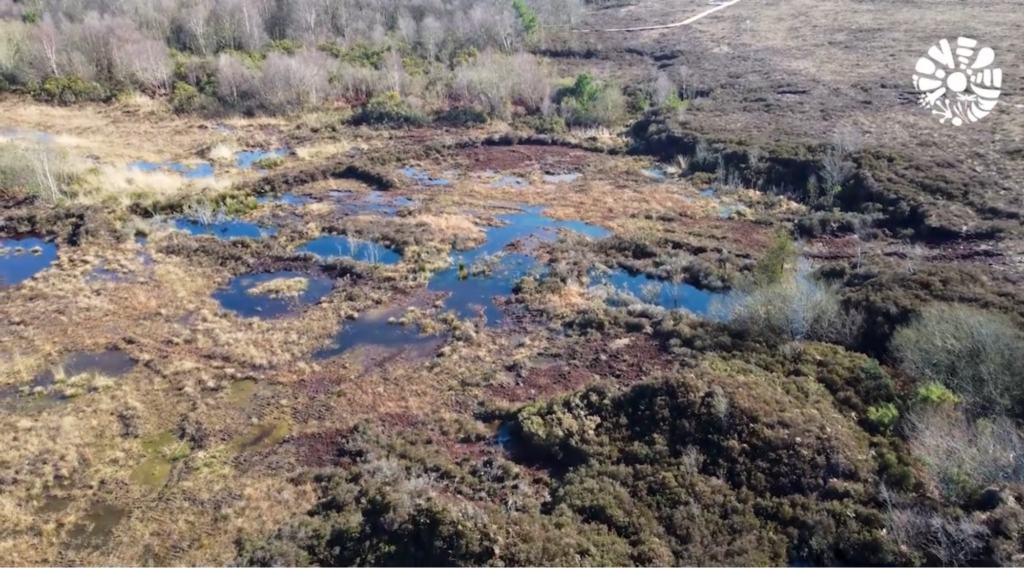
WATCH: A bird’s eye view of Cloncrow Bog
“Like, I often think we’re standing on a history book when we stand here, you know. If you go down a metre, you’re back 1,000 years, 2,000 years, 3,000 years, 4,000, you can go back 10,000 years. So our ancestors have left a mark in this place, and it’s not just a surface mark, it’s a mark that actually runs deep. And you can actually see when the first farmers came in, the first Mesolithic people, the first Neolithic people, the Bronze Age people, the Iron Age people, right up to the present time, they’ve all left an imprint here, and it’s been preserved. But here we are standing quite literally on the past. The past is actually beneath us here, and it is embedded here and it’s preserved here in the archaeology but also in the pollen and in climate change. You have the traces here of the first people that came to the Midlands of Ireland. And it’s beneath us”.
- To find out more about ETHOS and Cloncrow Bog visit the website https://www.tyrrellspasstrail.ie
For connected stories:
WATCH : Where the Curlew Calls – Tóchar Stories video series
LISTEN to the ‘Where the Curlew Calls’ podcast series on Spotify