Helen Shaw – Tóchar Stories
It’s a wild and wet Spring day on Carrownagappul Bog, near Mountbellew, Co Galway but Marie Gilmore, the guide at Galway’s Living Bog, is animated about the life bouncing up from the earth.
“In the bog at the moment, everything that was dormant during the wintertime is now coming alive, and you’ll see the colours slightly changing across the bog. It was all kinds of browns and greys, and now the flicker of heathers are beginning to come, and we can see the seedheads of the asphodel, and the moss itself with its beautiful, rich colours, beginning to shine through. And as the year goes on, it changes all the time. It is never the same”, she says.
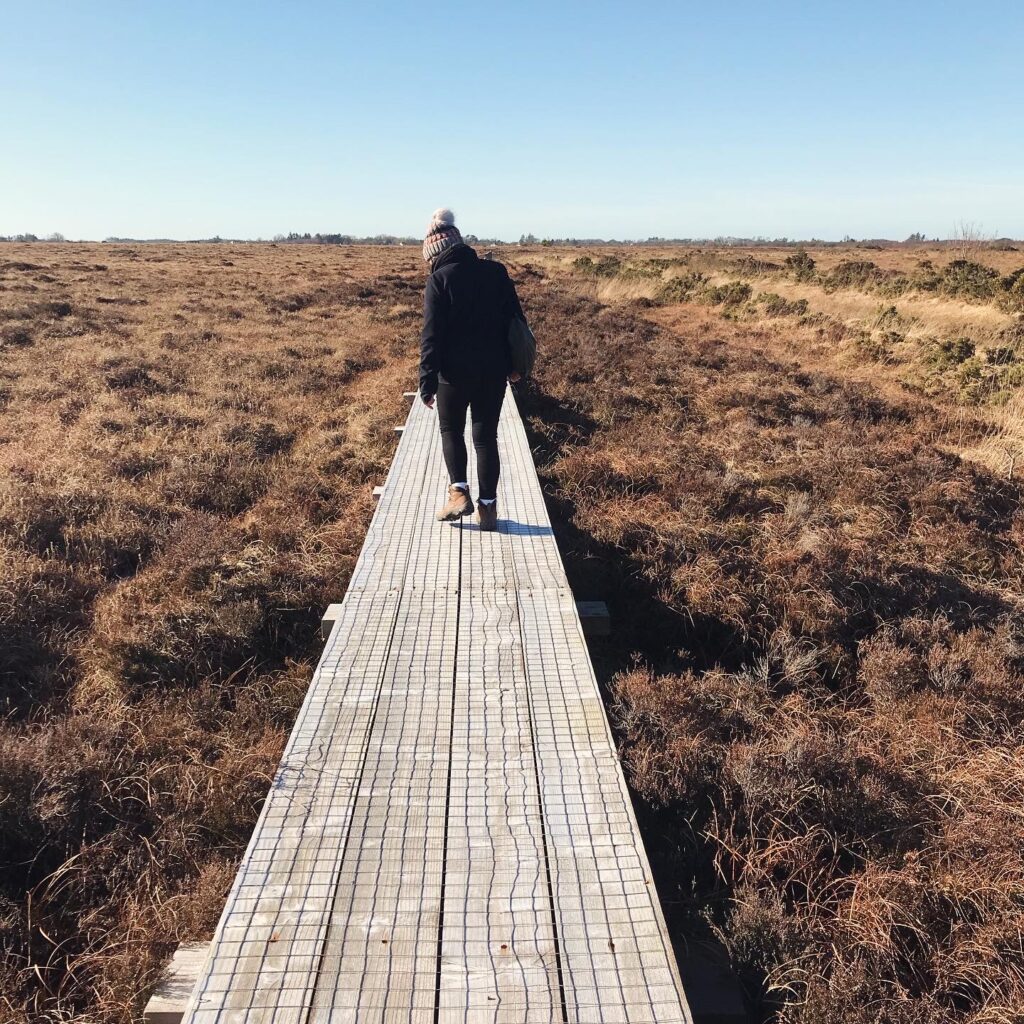
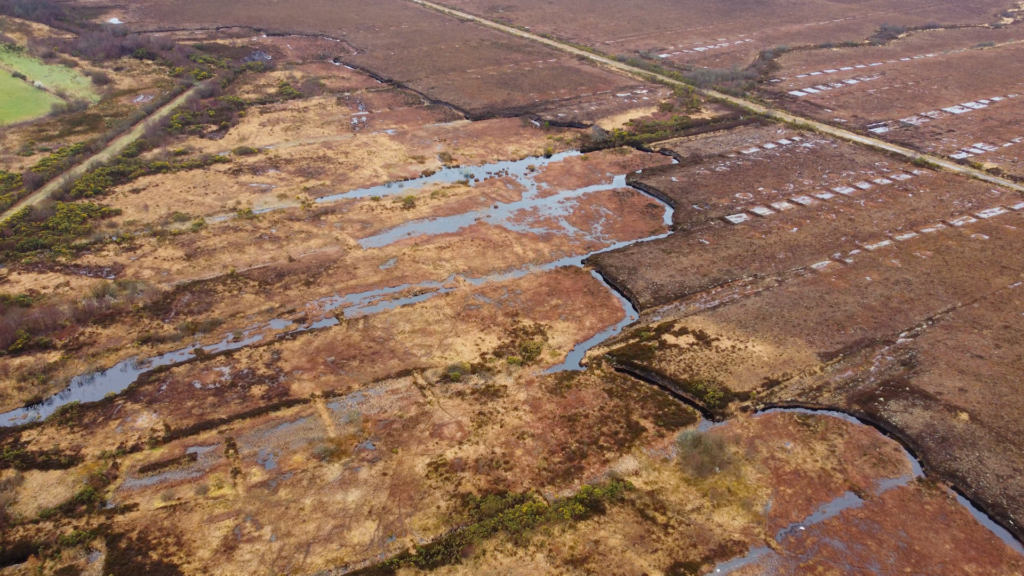
Marie grew up close to the bog. It was part of her childhood and like many in the area her family were cutting turf there for generations. “I have lots and lots of happy memories of being down in the bog with my family at a very, very young age, and I’ve always loved it, even the hard work side of it”. Turf cutting on Carrownagappul has ceased and the landscape now reflects ten years of restoration work.
●WATCH: Bird’s Eye view of the beauty of Carrownagappul Bog
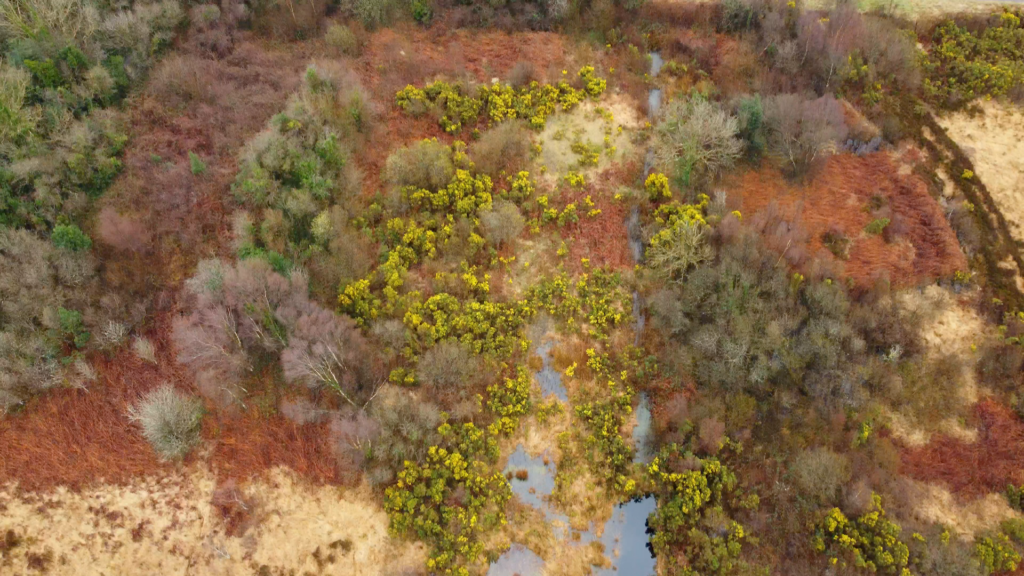
For Marie her relationship with the bog has evolved. It’s grown and deepened the more she has got to know and understand its story. “Even when we were in school, we were never told about the bog, the magic of it, what lived in it, how it was formed, ever. It was always seen as a wasteland or just a place where you got your fuel. And it’s only now, as I’ve got older, I just see the bigger picture of the bog, how amazing it is and so ancient and unique”.
● LISTEN: Marie Gilmore on the magic of Carrowngappul Bog
(credit Stephen Crilly)
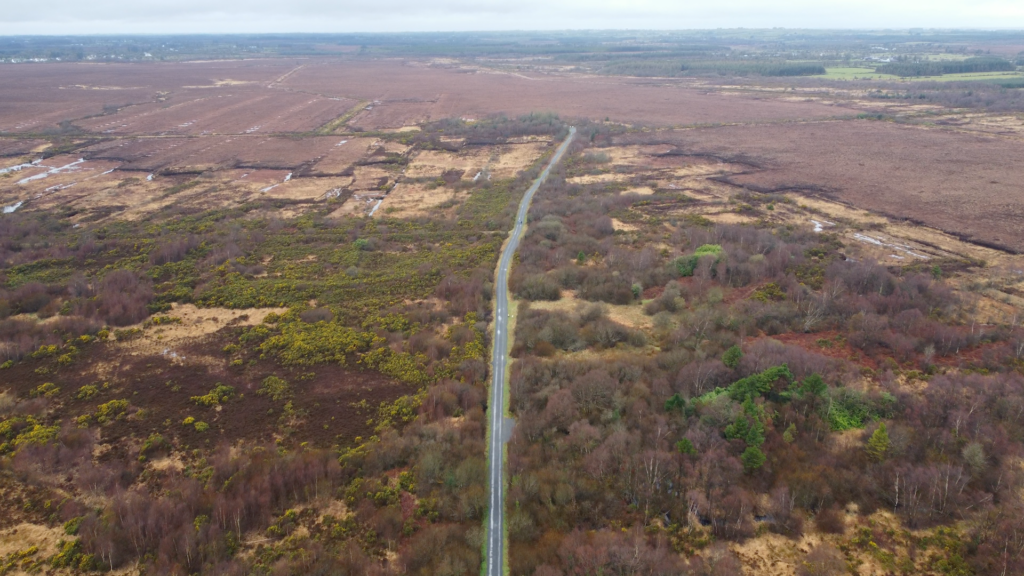
(credit Stephen Crilly)
Carrownagappul Bog is a national heritage treasure. It is a designated Special Area of Conservation (SAC) and at 850 acres it is one of the biggest, most accessible raised bogs in Ireland. It is also one of the largest areas of uncut high bog left in Galway. Maura Hannon, the manager at Galway’s Living Bog, the visitor centre where Marie is based, says the idea behind the centre was all about giving something back to the community when turf cutting stopped. “We started in 2019 and we were very lucky to have ex Minister Paul Connaughton on the bog committee. He wanted something set up for the community, hence the arrival of Galway’s Living Bog”.
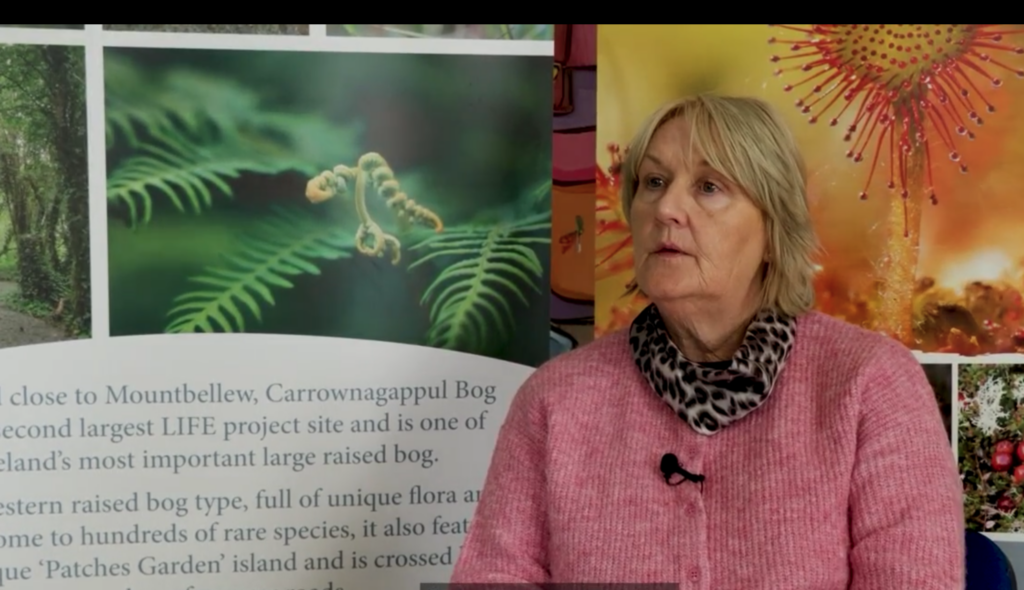
(credit Stephen Crilly)
Carrownagappul is one of twelve sites restored under the Ireland’s Living Bog Project, a major five year EU and Irish Government bog restoration scheme (2016-2021). Active raised bogs like Carrownagappul are among Ireland’s oldest landscapes, dating back over 10,000 years. Raised bogs once covered nearly three quarters of a million acres across the country but today less than 1% are active and growing; largely due to industrial peat extraction and drainage.
At the visitor and interpretive centre (situated at Galway Teleworks where Tóchar Stories met with the Mountbellew Men’s Shed and recorded bog memories from the area) Maura and her crew host guided tours. There is a ten minute video giving the story of the bog and its restoration and then Marie takes people to the bog for a guided walk. Since last year, through a pilot scheme with National Parks and Wildlife Service (NPWS) they have been able to set up ‘Bog School’ and to date have facilitated 800 primary school students and 82 teachers.”We’re very proud of that” Maura says and with funding repeated they are planning a busy rest of year.
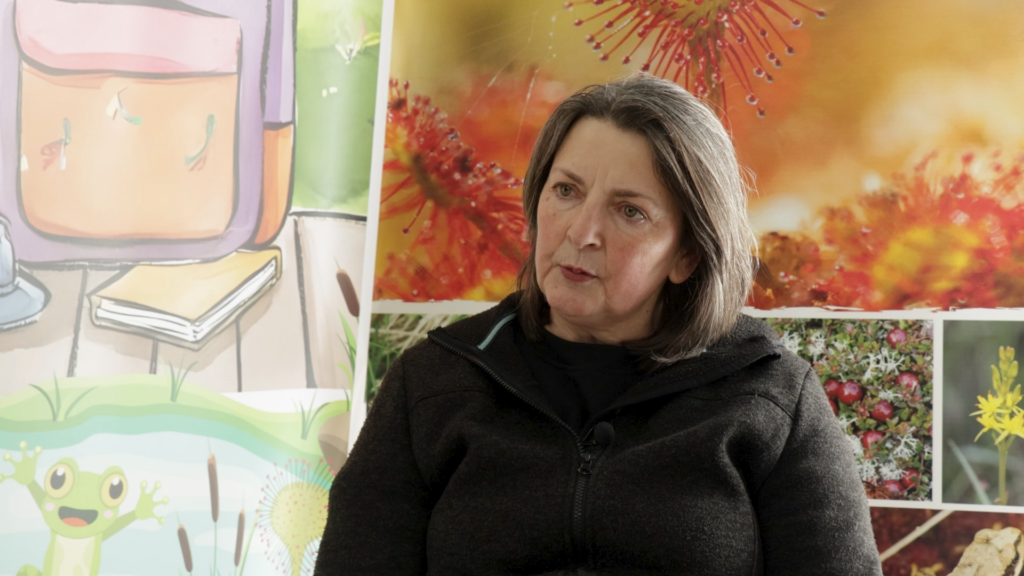
(credit Stephen Crilly)
Marie Gilmore loves working with the Bog School groups. “Children love to learn all about nature. And I think more than ever now they need to be outside and they need to learn about their environment and put away their phones and take time to be out together and having fun and learning things. And I think what they really love is the hands-on thing where you actually get plants that they can actually feel and touch and look at and talk about and it’s fantastic and they love it”.
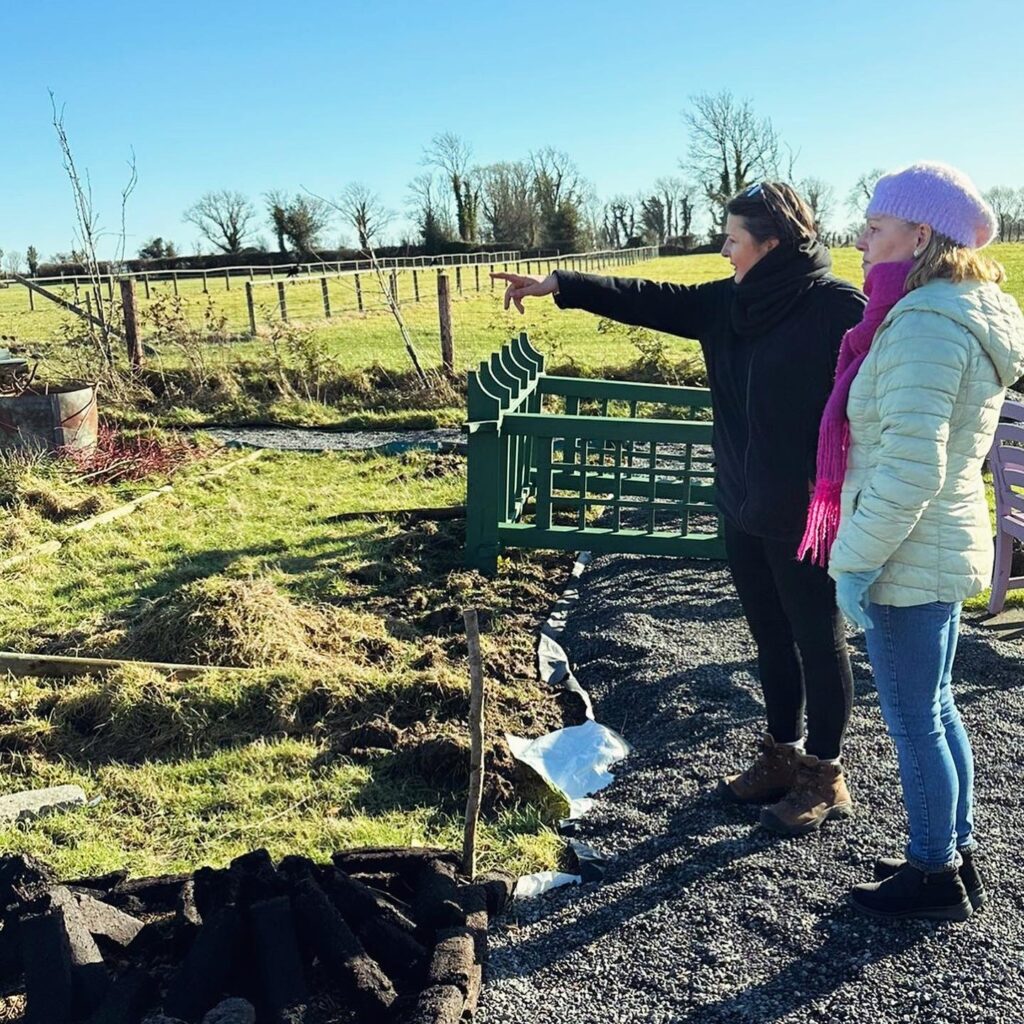
Marie’s hope for the future of Carrownagappul is that it will remain somewhere for people to enjoy and experience nature and that more of those bogs that can be saved will be restored. “I’d be quite happy if I thought that it was going to be kept for people to enjoy… and over the years, you can gradually see it coming back to the way that it should have always been; doing its thing”. Our ancestors, she says, would have seen the bogs as portals to another world. “So we never really saw it like that, we just saw it to use it for fuel”, Marie says but adds that “now we can see the magic of it, I think, because we can kind of stand back and you can see the beauty for what it is. It really is magical, it’s fantastic”.
For more:
To find out more information visit the Galway’s Living Bog website. To book a tour of Carrownagappul Bog with Marie, call the centre at +353 90 967 9765 or email at gtcomountbellew@gmail.com. Guided tours are €10 per adult and €5 for a child with group rates available. You can of course also walk the boardwalk yourself for free – just follow the road beyond the Teleworks Centre for Carrownagappul entrance.