A conversation with archaeologist Michael Stanley
By Helen Shaw, Tóchar Stories
I am standing at Toar Bog, in County Westmeath with archaeologist Michael Stanley looking out across a post industrial peatland where the remains of the Bord na Móna turf extraction days are still visible. There is forgotten and rusted machinery, rail tracks, an abandoned workers’ hut and across the perimeter stacks of fells logs transported there from another Bord na Móna (now BnM) site. It is a bright late August weekend, birdsong still fills the air and we have come here to record the story of what lies beneath us in the Midland bogs. We are in the shadow of Croghan Hill, in County Offaly, an extinct volcano dating back some 340 million years ago and a sacred place for our Bronze Age ancestors. There is a burial ground on the summit and the Hill is known as the inauguration place of the Kingdom of Uí Failghe – from which Offaly gets its name.
LISTEN: Where the Curlew Calls – archaeologist Dr. Michael Stanley
Michael knows this area well but is revisiting after a long absence. He has just climbed Croghan Hill to experience once more the panorama it offers of an ancient and changing landscape. The Iron Age bog body, Old Croghan Man, was found not far from there in 2003, and now wind and solar farms are visible across the horizon marking the transition from the industrial turf industry that shaped this region from the late 1940s. It is impossible not to be aware of deep time and space when you look out across the land and the peatlands with their 10,000 years of formation paralleling human settlement.
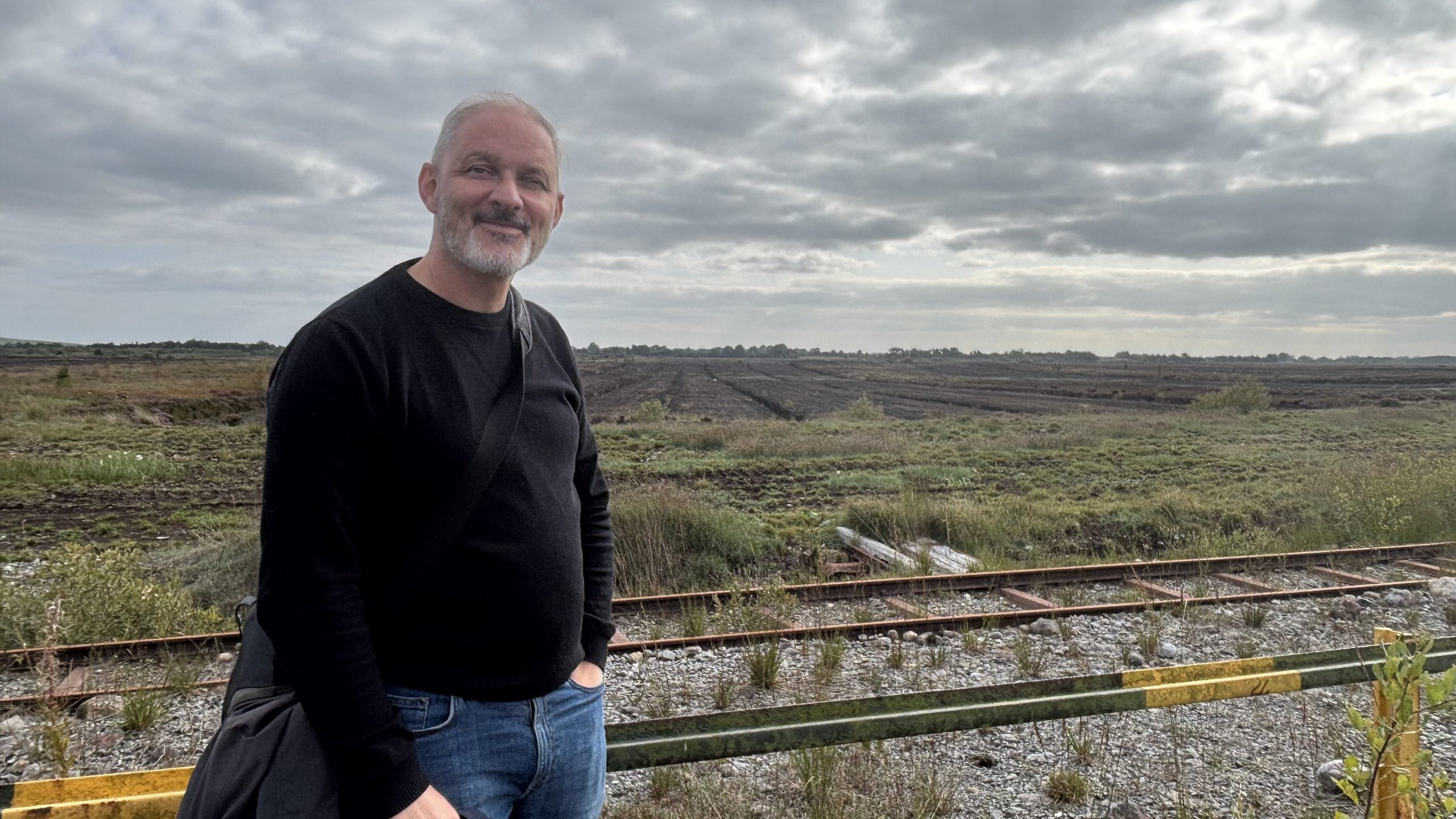
“These boglands are not wastelands”, Michael says. They may look like wastelands today but people hunted here, gathered materials. They did things like build fulachtaí fia (cooking pits) on the margins of bogs, and rituals took place within the bogs as well. A lot of the finds in the National Museum derive from bogland locations that have been found by peat cutters”.
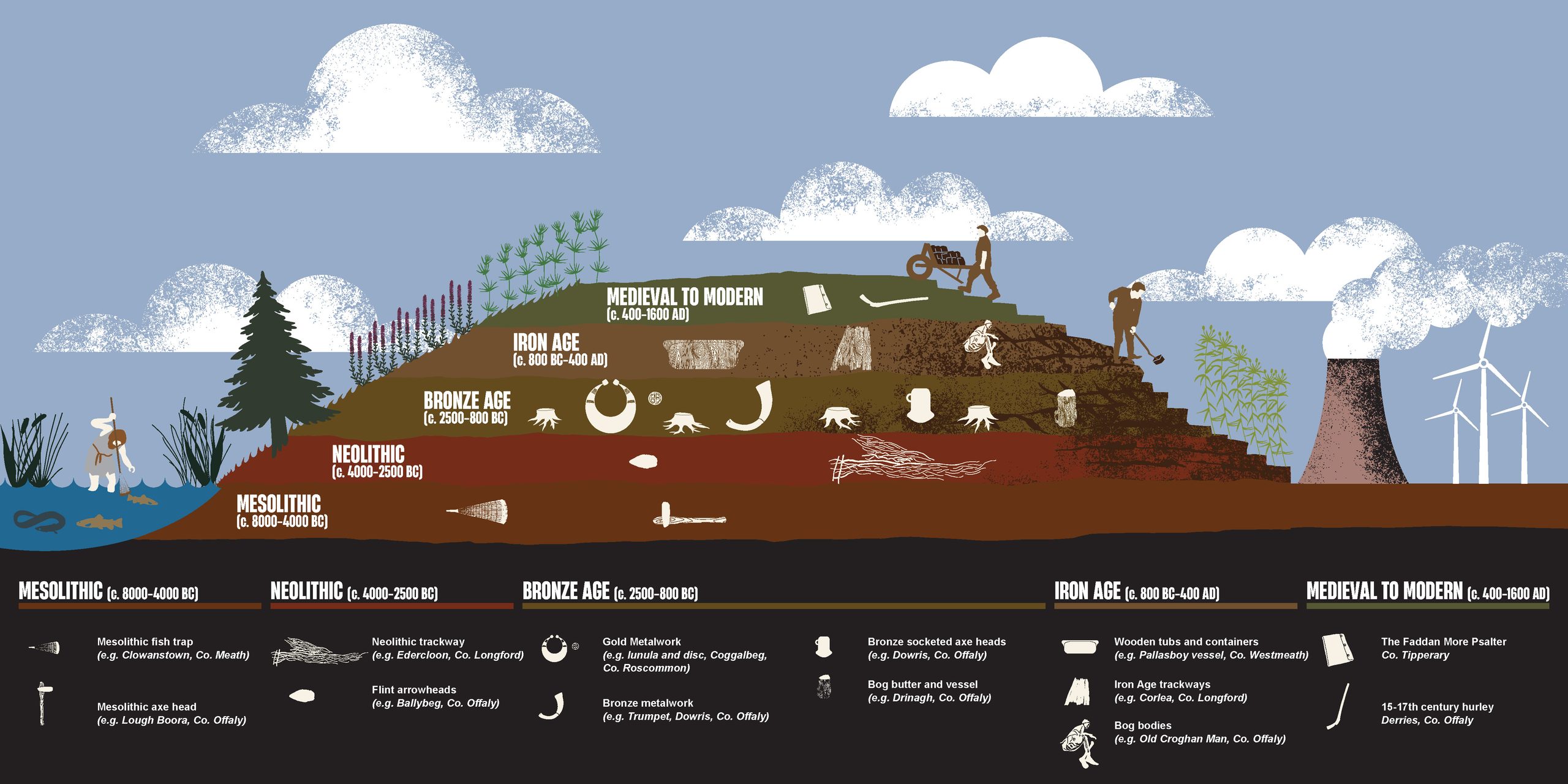
Michael started his archaeological career in the peatlands with the specialist survey team, the Irish Archaeological Wetland Unit, (IAWU) set up by Professor Barry Raftery, from University College Dublin (UCD) in 1990. That unit, established by the Office of Public Works (OPW) and UCD’s Department of Archaeology, conducted surveys of Bord na Móna Midland bogs – including Toar Bog – identifying, recording archaeological assets, particularly wooden toghers) and fed that data into the national archaeological inventory managed by the National Monuments Service. Michael worked with the unit as a research student and assisted in Professor Raftery’s ground-breaking work at Corlea Bog, including the installation of the Corlea Trackway in the early 1990s, and he became a full-time member of the unit’s team in 1999. He worked with IAWU until 2005 when he took up his current role as archaeologist with Transport Infrastructure Ireland (TII). He is back in Toar Bog to revisit survey work he did here twenty-five years ago and present to the local community in Tyrrellspass as part of Heritage Week.
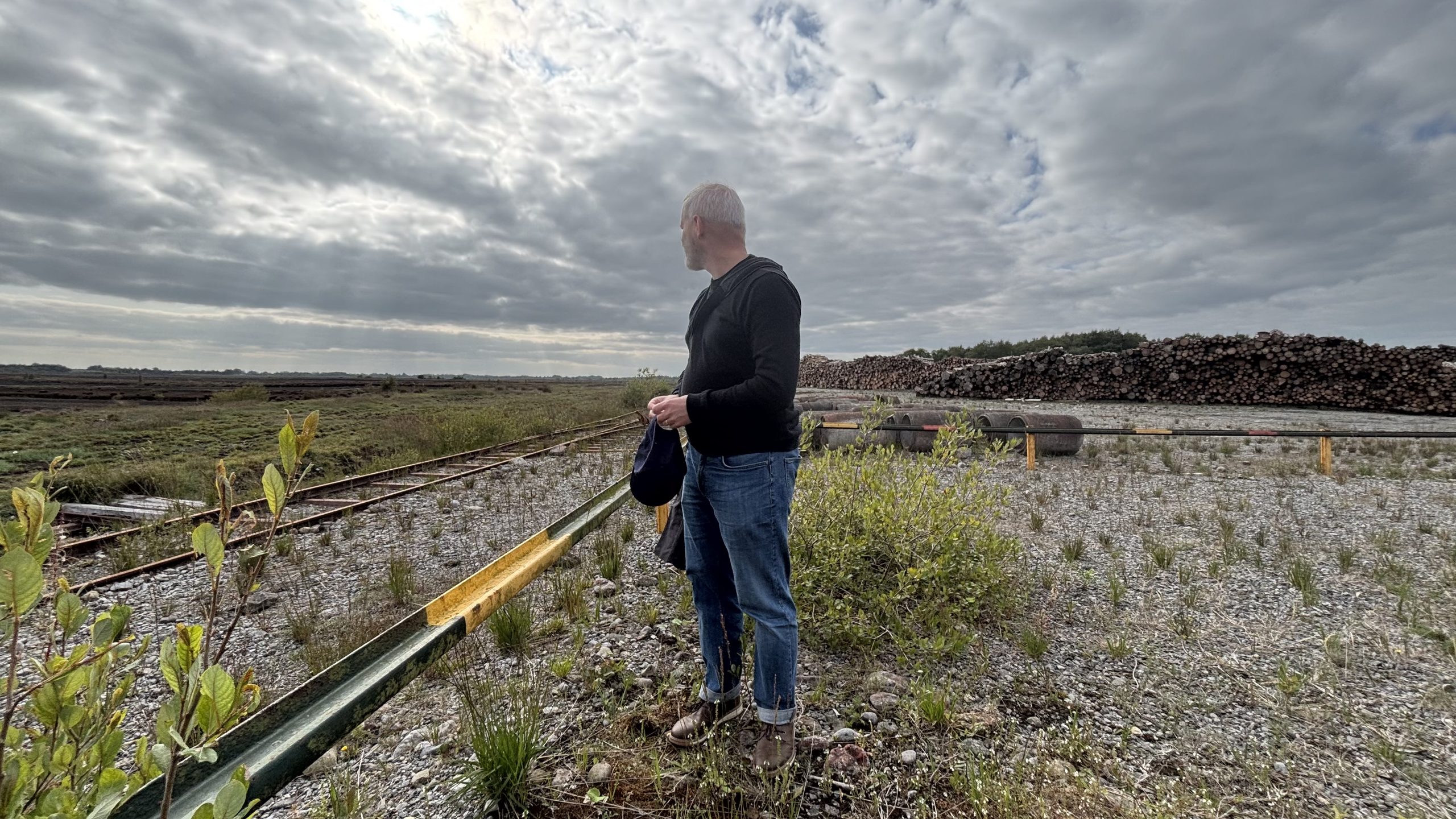
Toar Bog was in production under Bord na Móna from the early 1980s but milled peat extraction ended here in 2020. In 2000, Michael was part of a team surveying the bog that found over 400 archaeological sites but given the bog remained in production for another twenty years it is likely many of those were destroyed.
While the land around us looks cutaway and depleted, Michael sees the archaeological potential it holds. “The milled peat production brought peat levels down to an extent they were exposing late Bronze Age sites. One of the oldest toghers we discovered was radiocarbon dated to 1048-827BC. Below that I have every reason to believe that there would be even older material. In another bog to the east we found a type of stone tool made out of chert that dates from the late Mesolithic period – say 6700-4000BC”.
Mesolithic is when human settlement is happening on the island. In 1977, not too far from Toar Bog, at Boora, County Offaly, a Bord na Móna worker, Joe Craven, began noticing a sandy ridge where a peat-floored lake had been drained some decades back, in preparation for extraction. When it was excavated archaeologists found over 14 hearths with traces of human settlement and cooking – showing human settlement to little more than 500 years after the Ice Age. The intertwined life cycle of the peatlands and human society.
“I view it as a tapestry where I see all the different aspects of different epochs, historical periods, prehistoric periods, and they are all here. The nature of the human occupation on the island is such that you can hardly put a shovel in the ground anywhere without hitting some trace of the past”, Michael says. He sees the recent past as valid a trace as the most ancient. On the drive over he passed through Rhode, where the cooling tower has been demolished and the landscape is now dotted with wind turbines. “So I was wondering about what the impact of this change has been to all of those Bord na Móna workers, whether it was the guys in the tractors going up and down the fields, or people working in the offices doing the admin? Where have all those people gone? What industries have they gone to? What has been the social impact of that? Because, you know, Bord na Móna has had this massive positive social impact on the Midlands in terms of providing employment, providing infrastructure, even housing stock throughout the Midlands. That’s a really interesting story in terms of the history of the State and the social history of the Midlands. So I see all of that as a tapestry, and I see it, all as having value, and it’s all interconnected.”
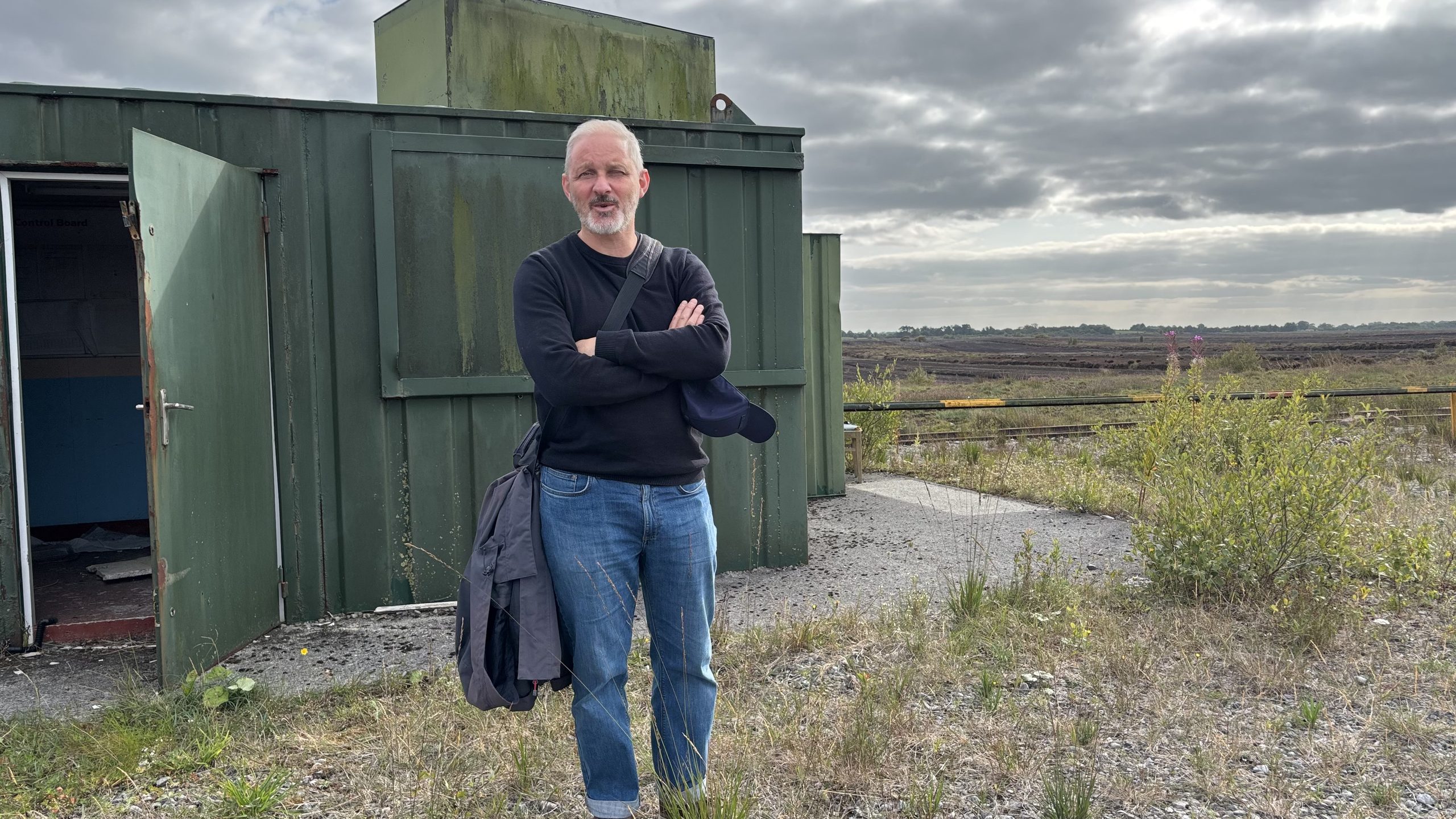
What Michael, and indeed other archaeologists working in the wetlands, want is that history, archaeology, social culture and heritage storytelling have a place at the table when we plan the future use of the post industrial peatlands; whether for ecology in nature restoration, reforestation or renewable energy in wind farms. Even the most depleted bogland has the potential to add to our knowledge and our understanding. “So at the very least, if you are doing these works, you need archaeological oversight to ensure that if they are having an impact that we can at least record the archaeology or see that it’s preserved in situ or explore if the works can take place at another location”.
The debate on how we use the bogs often centred on their current usefulness to humans, and human needs, but what Michael is reflecting is a call to see the land within a wider frame of value and to see the time container of the land itself as an intrinsic value. If nature restoration and climate solutions must have, as Professor John Feehan argues, equal value then we also need to value what the land itself carries. Michael Stanley’s work today in the peatlands is a personal commitment, honouring his own roots in both the profession and the region. He wants to see the public included and involved in both the findings that have come from archaeological work but also in the question of balancing how we carry our past, or origin stories, while shaping our future viability. “I’m a big advocate for the Midlands,” he says smiling as we walk out. “I think it has plenty to offer in so many ways and certainly archaeologically there is a lot of interest here”.
You can read Dr. Michael Stanley’s research on Toar Bog here:
FOR MORE :
Visit the UCC research project Irish Peatland Archaeology Across Time (IPeAAT) https://www.ucc.ie/en/peatlands/
READ: Digging Through Time – Westmeath Examiner February 12 2026
WATCH: Stories of Croghan Hill, Offaly Heritage, Offaly County Council
WATCH: Story of the Bogs, John Feehan series, Offaly Heritage, Offaly Council Council.