Helen Shaw, Tóchar Stories
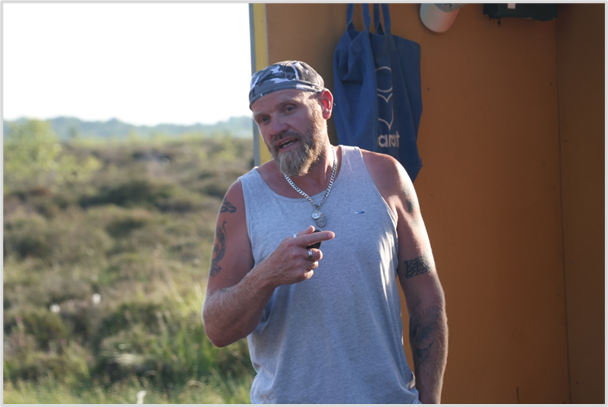
Owen Murphy is a man with a mission. He is the Senior Project Manager of a national wildlife conservation scheme called Breeding Waders EIP (European Innovation Partnership) working to secure and restore Ireland’s wader bird populations, like Curlew. With just an estimated 100-120 breeding pairs of Curlews left, it is a race against species loss. “So what’s happened is people are now losing the sense of what the Curlew is”, Owen says. “For years in conservation we’ve been relying on people reminiscing and wanting something back. Now we’re getting to the stage where people don’t remember it anyway, so you have to come up with something else. We have to have another strategy”.
WATCH: Owen Murphy on the Breeding Waders EIP programme
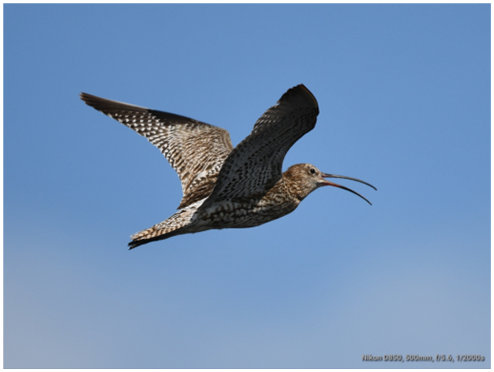
Healthy wetland habitats are vital for the survival of Curlew, Lapwings, Snipe and Redshank so bog rehabilitation and restoration work is part of that strategy. But Breeding Waders EIP is focused on incentivising farmers and landowners to partner with them on sustaining wader habitats. “So what we’re doing is we’re paying landowners to implement management plans, So you’re sitting down with a landowner, saying, ‘this is what we need done, or this is what birds like, how does that fit in with your farming regime’? And then we’re paying them for delivering. So not only are they farming beef or sheep, they’re also farming Curlew or they’re farming Lapwing”.
Owen is a Midlands man, he comes from Drumclonown, near Cornafulla Bog, Roscommon, and knows the Shannon Callows and Lough Ree SAC region well. He grew up surrounded by farms and bogland so when he sits down with landowners they listen. They understand each other. “Farmers are very good at producing. So if you’re telling them, can you produce me more Lapwing chicks, and you tell them the recipe for doing that, they will implement it. There has been a catastrophic decline of Curlew – its 98% reduction in Curlew populations compared to the mid-’80s. So we have 100, maybe 120 pairs left, and so when you think about the size of Ireland, only tiny, tiny fractions of the country now have a Curlew left to hear. I mean, Corncrakes are the same”. Like Curlew, Corncrake has suffered a massive decline in population due to a shift to more industrial, mechanised mowing and from hay-making to silage.
Beyond incentivising farmers to farm for wildlife, Breeding Waders EIP is using technology, through thermal sensing drones, to identify nesting Curlews and then work with landowners to protect them. It is a partner in the Midlands Mink Eradication Programme, given the impact the invasive American mink has on ground nesting birds. But the existential challenge for Curlew is so urgent that in 2024 Breeding Waders EIP, in partnership with Fota Wildlife Park, launched the Headstarting programme to rear and nurture fledgings from eggs. In 2026 Breeding Waders EIP made conservation history by going a step further and importing eggs from a wild population in England’s Yorkshire Dales. These eggs were brought to Ireland, hatched and reared as chicks, in partnership with Dublin Zoo, and over 50, UK and domestic, fledgings were released into locations in Lough Corrib and the islands on Lough Ree. Lough Ree is seen as the most important region in Ireland for waders and these uninhabited islands are sanctuaries for them.
Owen describes Headstarting as an emergency initiative. “The adult birds are surviving year on year, but the eggs and chicks have been lost, so they’re not reproducing, they’re not leaving anything after them. And so Curlew can live into their 30s and can be coming back to the same area, breeding, breeding, breeding year after year, getting no chicks away, and then they die and the curlew is gone. So what we’re doing is buying us time. Ultimately we need habitats to be restored but if the habitats are restored and there’s no birds left, well, it’s not great. So we’re trying to hang on to that remnant population and supplement it.”
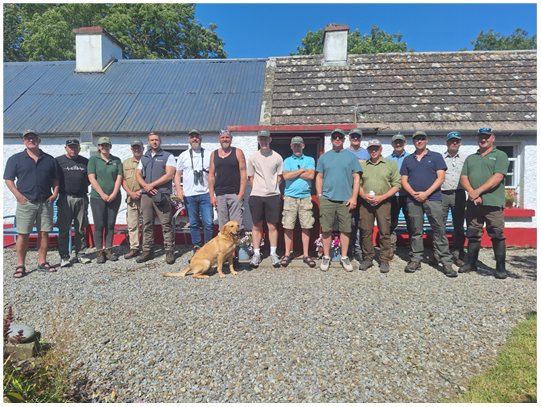
Photo: Breeding Waders EIP team on Clawinch Island ( Owen Murphy)
To support this work the Irish Government has made several strategic purchases of islands in Lough Ree; in 2023 the Black Islands and in 2024 Clawinch Island, in County Longford. The NPWS is working in partnership with Breeding Wader EIP, local farmers and communities on these islands to progress nature conservation. For Owen, these State strategic purchases like Clawinch enable long-term planning across decades rather than years, knowing that the landscape is not going to change. “On those lands you are putting in the gold standard of conservation, all the actions that need to happen are happening, so you are hoping that they will be a net producer of birds into the landscape and as other things happen in the wider landscape, like habitat improvement, bog restoration, etc, there will be birds for those habitats”.
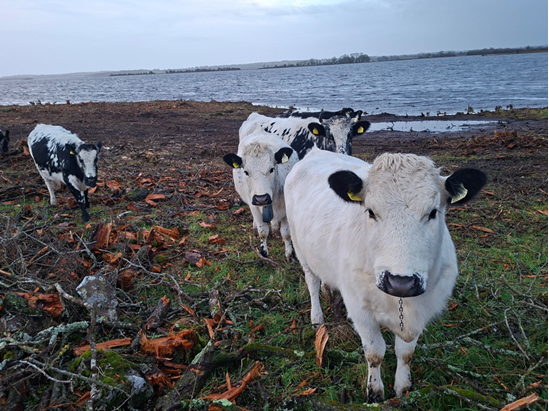
Clawinch, along with other Lough Ree islands, is being used as a rearing and release site for Curlew chicks under the Headstarting programme. When Owen visits he shares stories of the native Droimeann cattle and the local farmers still practicing traditions that go back centuries. They welcome the sound of the Curlew and the idea their actions and these lands are becoming a nursery that may return that sound to Midland bogs. If the bogland restores, then people like Owen and Breeding Waders EIP are working to ensure that there will be Curlew left to live upon it.
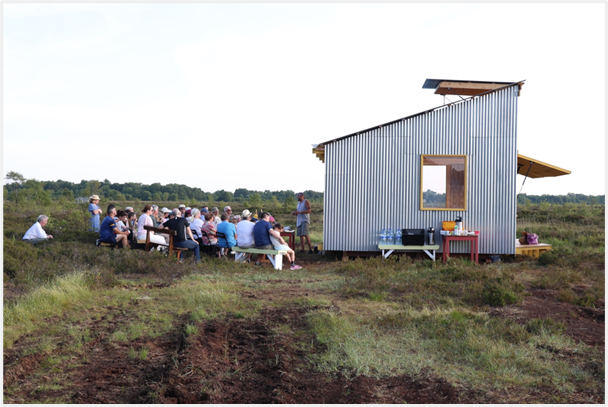
You can find out more about Breeding Waders EIP on https://breedingwaders.ie/ It is a €25 million project managed by NPWS and the Department of Agriculture, Food and the Marine and is co-funded by the European Commission and the Irish Government under the CAP Strategic Plan as part of the European Innovation Partnership (EIP-Agri) Programme.