Helen Shaw – Tóchar Stories
I first met Hugh Shepherd in late November 2024, when he offered to guide me on Abbeyleix Bog, just as Tóchar Stories began. While everyday in this project is a school day, in that I’m always learning, that morning with Hugh, and artist Annie Holland, was a revelation. Hugh opened my ears and eyes to the rich tapestry of life on the bog, the 600 species of moths, the precious native butterflies like the Marsh Fritillary, Ireland’s only protected butterfly, and the habitat they need to survive. The Marsh Fritillary (Euphydryas aurinia), breeds and lives in Abbeyleix Bog, and relies on the Devil’s-bit Scabious plant to lay its eggs and feed. Hugh and I met again when Tóchar launched in Abbeyleix in May 2025 and we once again walked the bog loop but it was only when I went back again in March this year that I finally got to record with him.
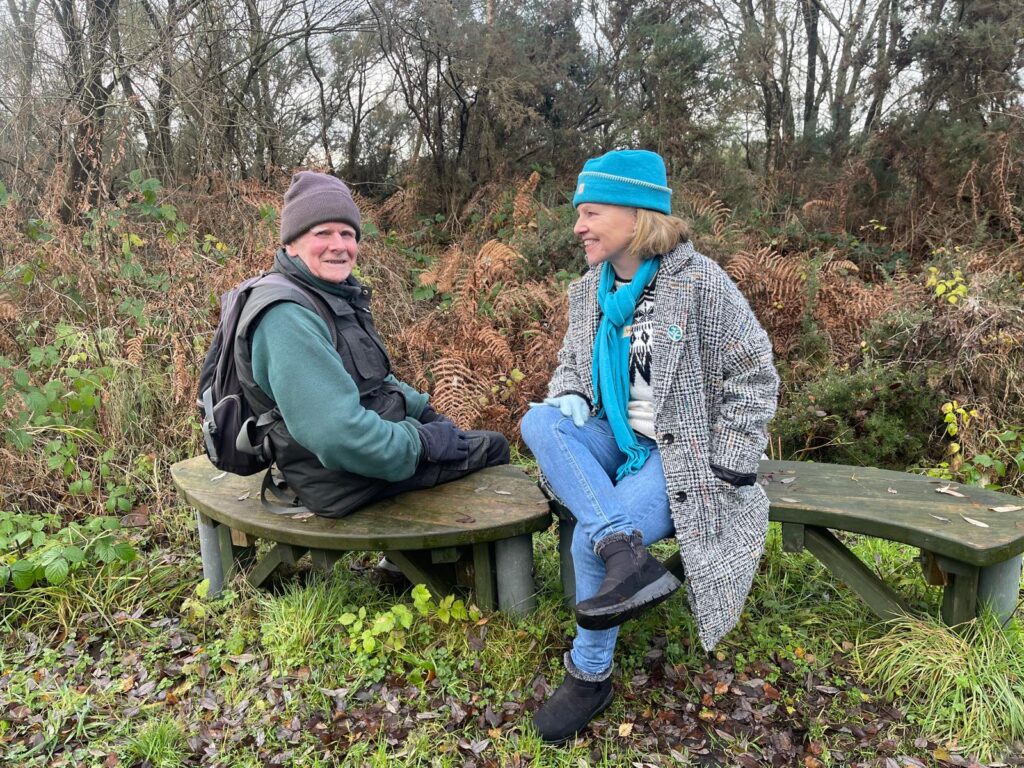
Hugh, a veteran volunteer with the Abbeyleix Big Project, has spent a life paying attention to nature. He grew up in England loving the outdoors, nature and wildlife in a family where knowing the names of trees and identifying birdsong was just part of life.
- LISTEN/ AUDIO: Hugh Shepherd, a life spent paying attention to nature
“ I lived in London actually when I was a youngster, but we had a garden and it was full of wildlife. I had my own little garden when I was 3 years old and we had hedgehogs and various things came through the garden,” Hugh says laughing at the memory and crediting his mother with nourishing his lifelong love of nature.
When Hugh is now in his eighties his hearing remains remarkable. As we walk he picks out and names every bird, sometimes when the sound is almost indistinguishable for us. He is used to people seeing it as a super talent but says it’s simply been a life of training – of paying attention. “Our hearing cuts most things out apart from what you’re listening to. You have to train yourself to not do that. It’s hard work, actually, but once you’ve done it, you know, you hear everything. And you can tune in on it”, he says.
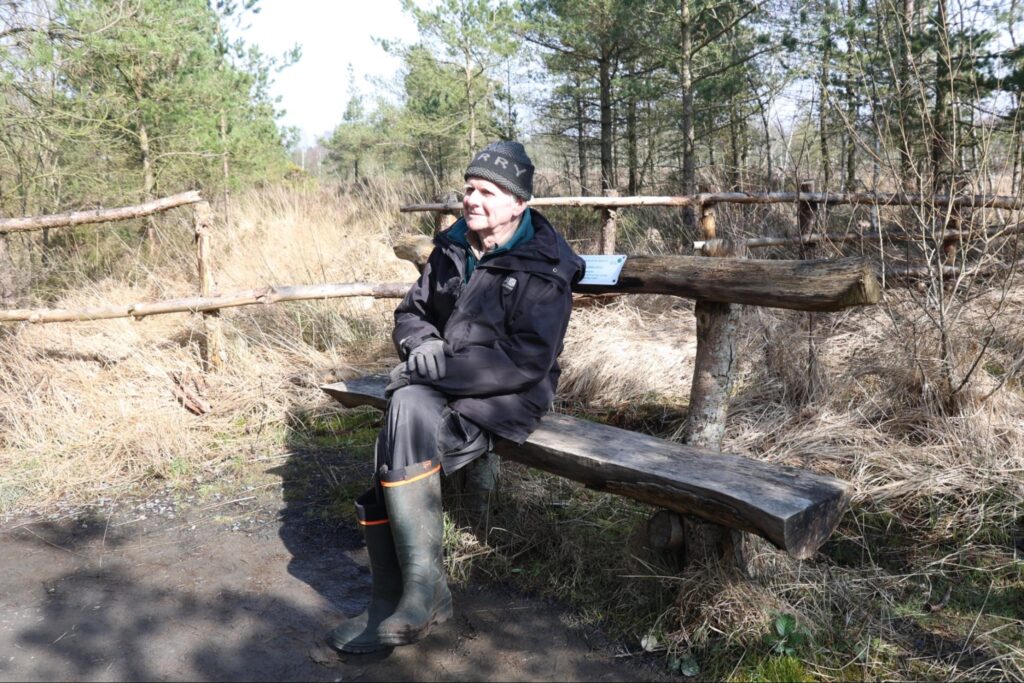
As we walk in the nature reserve of Abbeyleix Bog, a community-led project celebrating 26 years of conservation work this year, Hugh is always working; picking up litter, checking on wooden seats or bird boxes he has made down the years, or occasionally checking on the monitoring tools he has set up to track wildlife in the bog. He comes less to the bog loop now, his visits are usually very early, when there is low human traffic and it is quiet, so birds, insects and wildlife like the deer, in the woodlands, are more active.
- WATCH/VIDEO: Hugh Shepherd on the Abbeyleix Bog walk
He got involved in Abbeyleix Bog Project around 2012 when the community group were clearing trees, volunteer pines, from the bog and beginning to create the boardwalk. “ I just joined in, and you know, I did a degree in Nottingham University, and one of my subjects was bog ecology. So it was just going back to what I’d done sort of 30 years before, or more”, Hugh says modestly. People like Ricky Whelan, Offaly’s Biodiversity Officer, who was himself a volunteer leader in Abbeyleix Bog, praises the unique role Hugh played, combining bog ecology expertise with hands-on skills in tree maintenance and wood crafting let alone photography. Many of the information signs along the loop, showcasing the flora and fauna of the bog, carry Hugh’s credit.
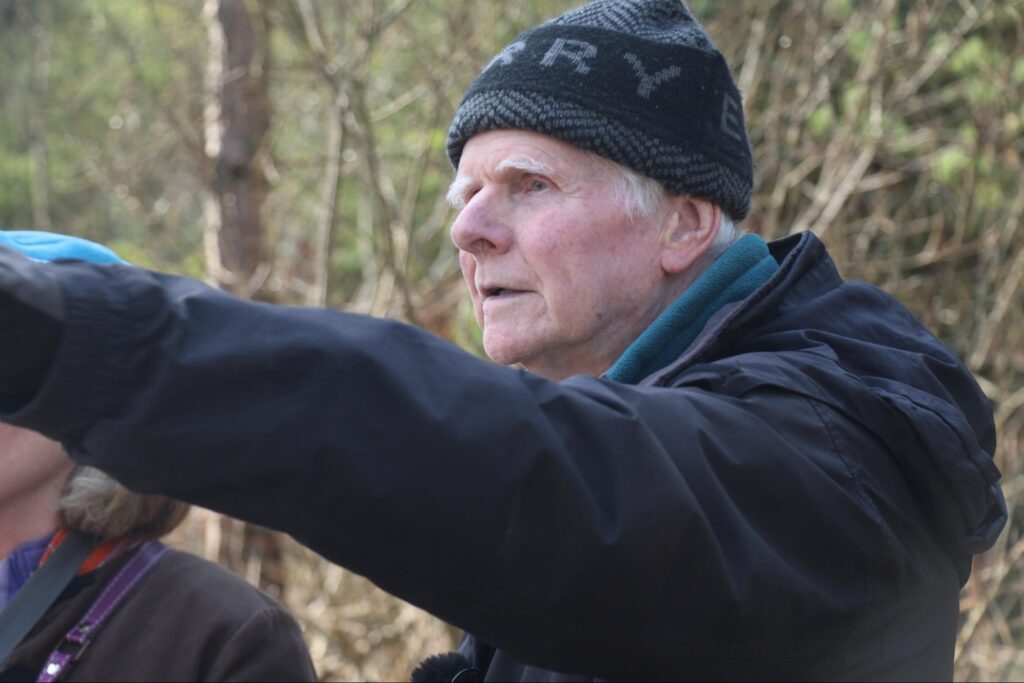
Hugh is quietly proud of what’s been achieved in Abbeyleix. It’s a haven to visit. But for him the price of success has been the challenge of trying to manage the ever increasing number of visitors – and sometimes the thoughtless littering and dog poo humans can bring into the reserve.
“I mean, as far as I’m concerned, the place just has too many people on it. The wildlife takes itself off as far as possible. And you notice that with the animal population. I used to get quite a lot of them on the camera (discreet monitoring cameras placed within the woodlands) and now as soon as summer comes, there’s not a sign of them because there’s too many people with too many dogs that are let off and things like that. So it’s difficult”.
“We don’t have people, very many people who are aware of the biology of the place. The people who are working here do a wonderful job looking after the paths and everything else, but there are very few people who understand how the bog works. You can’t have the animals or the plants or insects or water stuff without the water being right and proper plants for caterpillars or whatever being there. It’s quite simple really”, he says.
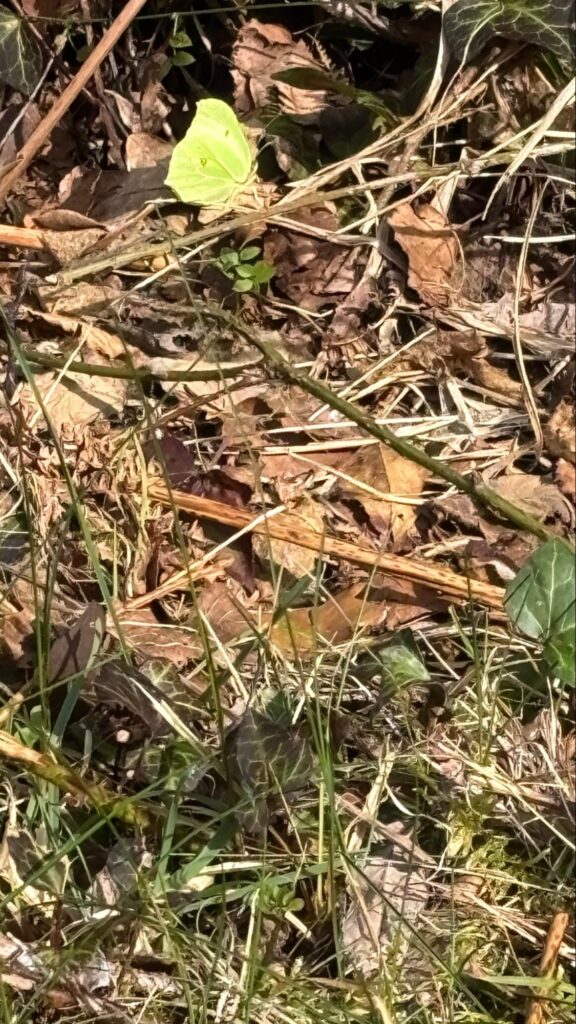
It’s that interdependence of needing the Devil’s Bit Scabious if we want to protect and see the Marsh Fritillary butterfly.
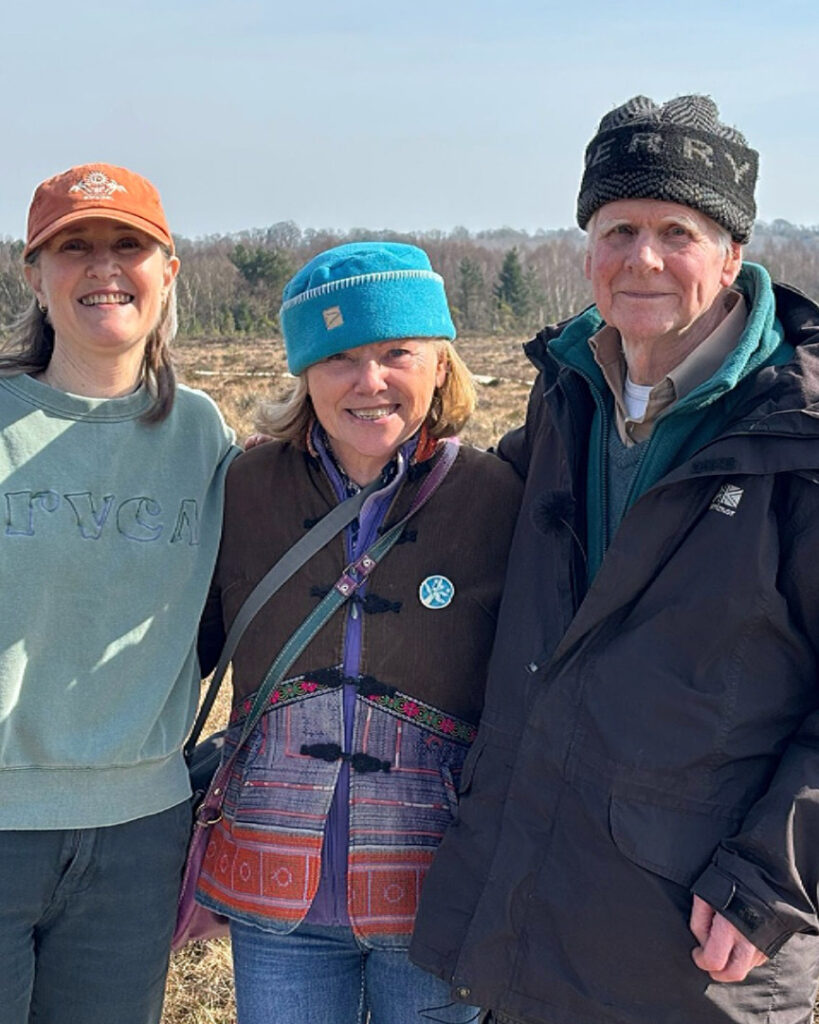
For Hugh in the balance between the needs of people and wildlife the scales need to tip in nature’s favour, particularly when we see so many species under threat and disappearing.
“It’s a lovely place …It’s a public amenity, and everybody seems to enjoy it in their own way. Having seen it develop more or less from the beginning, from putting in all the pathways and all the other aspects. It’s been very interesting,” he says as we wrap up our walk.
It’s always a privilege to walk with Hugh, there is such a wealth, a life of experience and knowledge that he gently shares. He is a natural educator and as always when I leave him and Abbeyleix I wish we could match him with a cadre of enthusiastic apprentices who could gain from that wealth; that life of paying attention to nature.
You can find out more about Abbeyleix Bog Project and volunteer if you are local through the website : https://www.abbeyleixbog.ie
Connected Tóchar Stories:
- READ: Check out our earlier feature on Abbeyleix and our chat with Fionna Dunne, chair of the Abbeyleix Bog Project and WATCH video with Fiona
- WATCH VIDEO: Melissa Casey, macro-photographer on Abbeyleix Bog and follow Melissa macro photography work from the boglands on https://www.instagram.com/missymelissa65/
- FOLLOW: Tóchar Stories on Instagram on @tocharstories