Helen Shaw – Tóchar Stories
On January 24th 2025 Ciara Egan and the Lemanaghan Bog Heritage and Conservation Group, Co Offaly were preparing for the annual community commemoration of St Manchán’s feast day at St Manchán Church, on the ancient monastic site where Manchán built his monastery in 645AD.
It’s close to a stone dome known as Mella’s Cell, associated with the saint’s mother, Mella and a Holy Well beloved by local people. But on the night of January 24th Storm Éowyn hit, causing national devastation. The community event was cancelled. But after the storm passed people noticed that, beyond the site, several large pine trees had been unearthed and what looked like bones were revealed. Local historian and volunteer community leader Séamus Corcoran was called down and he said he thought the bones were humans.
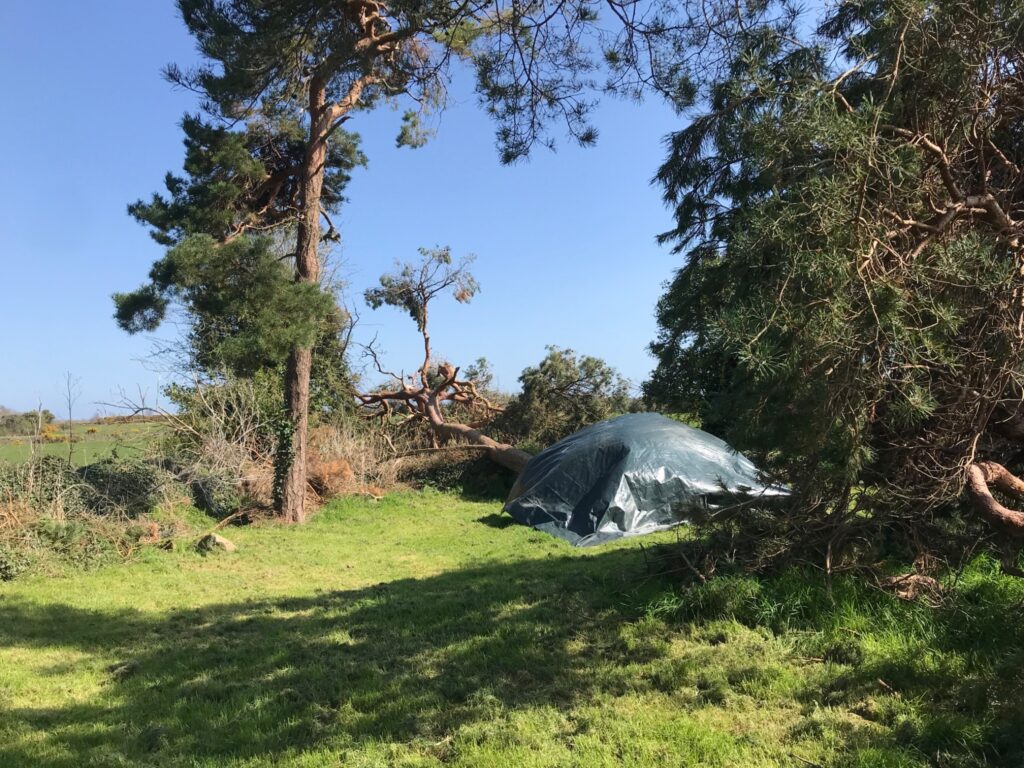
That area was then protected and the group contacted the Heritage Officer in Co Offaly County Council. A full archaeological investigation was initiated, facilitated by the National Monuments Service and the National Museum. Later, a team of archaeologists led by Dr Denis Shine, a Birr native who knows the area well, excavated the site. The remains have now been carbon dated to at least 1,000 years, the early Christian period, and that discovery is changing both local and national understanding of the significance of the monastic site. “We wouldn’t have thought this was where humans were buried”, Ciara Egan says.
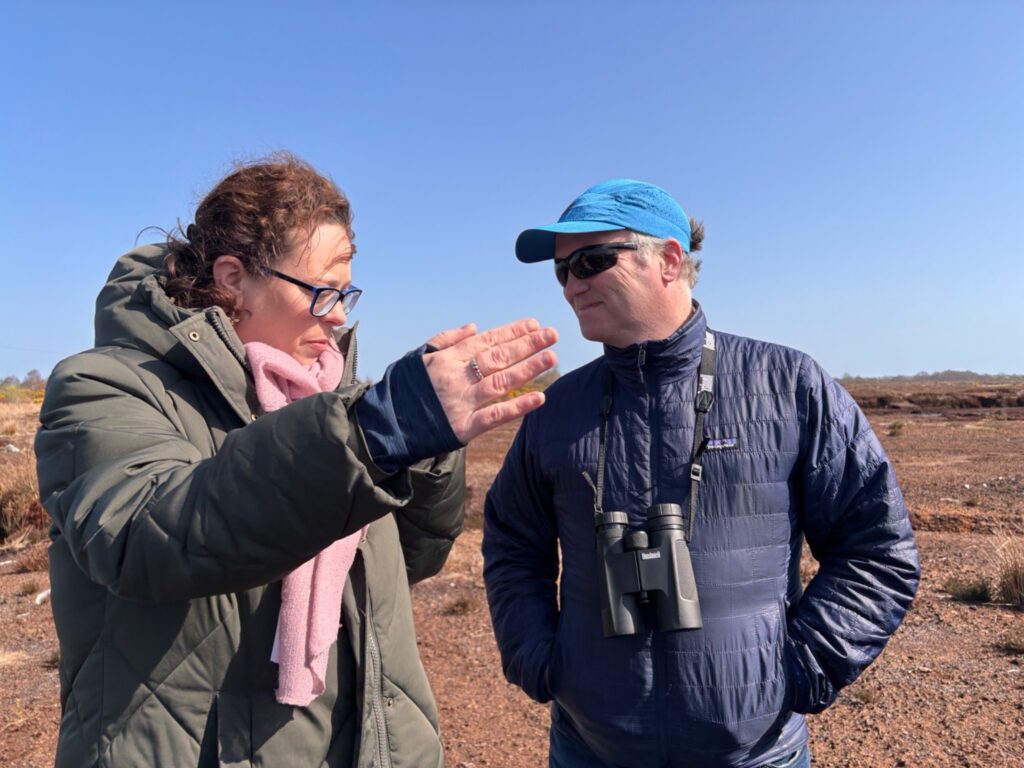
For the local community the revelation, on the Saint’s feast day, is like the past and the land talking back. “The discovery feels like a message from our ancestors,” is how Aoife Phelan, from the Lemanaghan Bog Heritage and Conservation Group describes it.”It is a moment when a sacred landscape has spoken again, revealing that Lemanaghan still yields the secrets of a deeply rooted past”.
In recent years the community group has been mobilised to try and stop Bord na Móna (BnM) from developing a windfarm on Lemanghan Bog. The group says over 2,000 people opposed the zoning of the land as a windfarm. The Lemanaghan peatlands were previously part of Bord na Móna’s industrial harvesting of turf and BnM and SSE Renewables plan to install 15 turbines on part of the land not far from the monastic site.
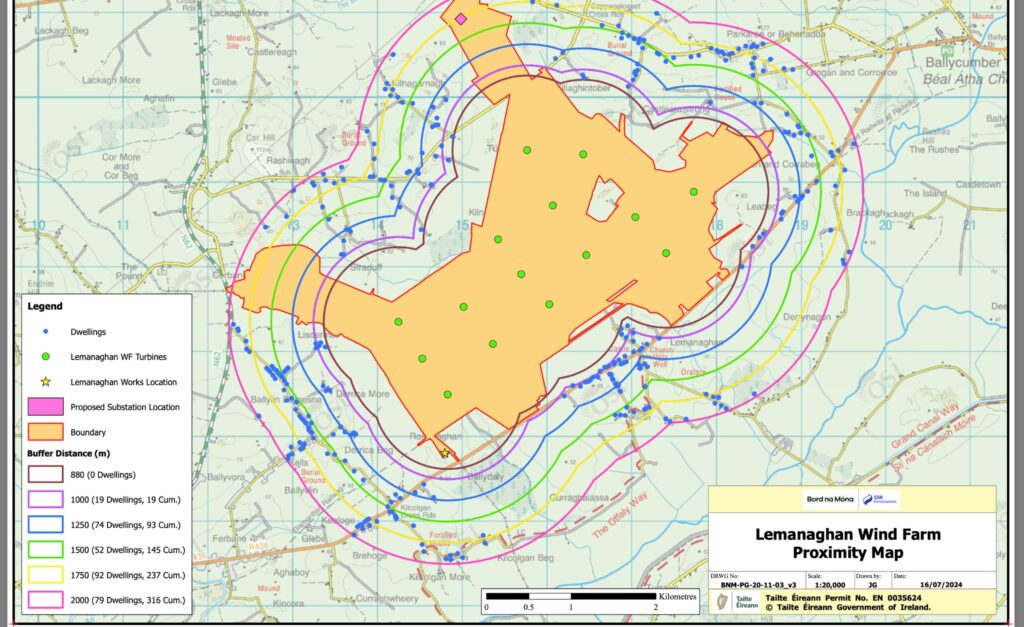
Locals like Ciara, Séamus and Aoife believe the land should be allowed return to nature conservation and that the proximity of the windfarm to the heritage site itself makes it unsuitable. While the discovery of the ancient Christian burial site underscores community opposition, BnaM and SSE Renewables say the plan goes ahead and the nearest wind turbine is a kilometre away from Mella’s Cell. The windfarm project has been designated as a Strategic Infrastructural Project and therefore is handled directly by Coimisiún Pleannála. Ciara told Philip Boucher Hayes, on RTÉ Radio 1 Countrywide “we’re in crisis on biodiversity” and that the community is making the case to preserve the bog landscape, for nature and national archeology.
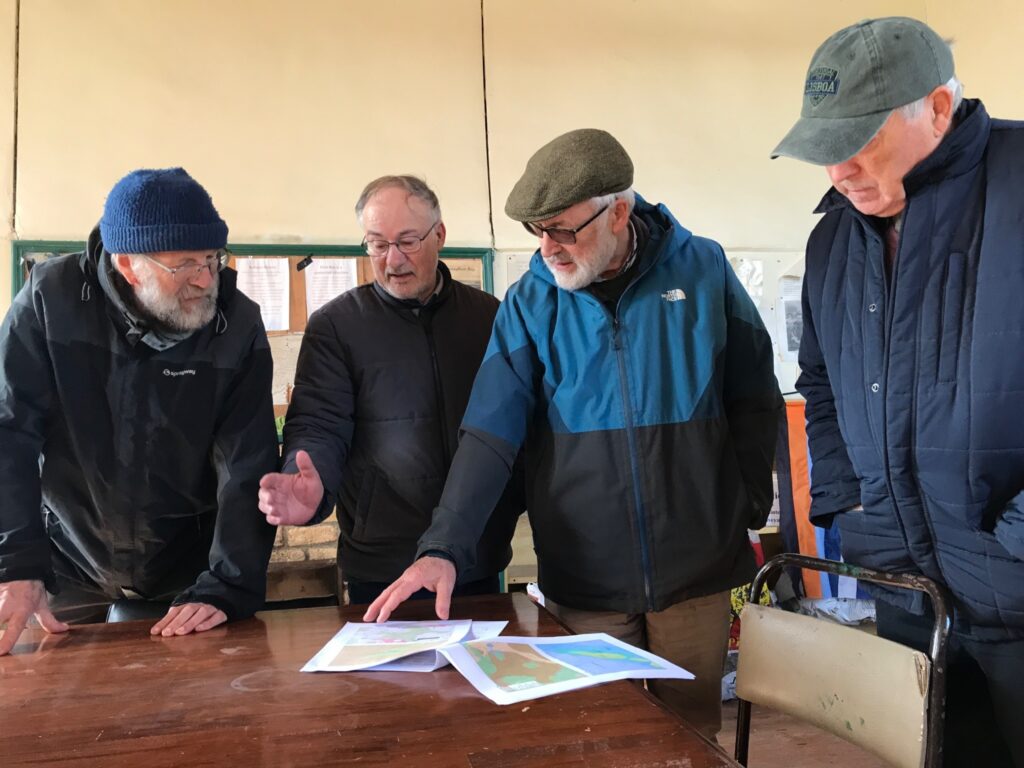
LISTEN: Séamus Corcoran on what the bog means to him (recorded at Tóchar Stories Boglands event, National Library, July 2025)
Dr. Shine’s team is still investigating the site but told RTÉ’s Sinead Hussey, Midlands Correspondent, that multiple individuals were found buried according to Christian tradition, aligned east to west. Scientific analysis shows that one burial dates to between 662 and 817 AD, while another dates to between 707 and 939 AD, meaning the individuals were possibly laid to rest within decades of St Manchán’s own death in 664 AD. “It looks like we have an early medieval cemetery on the site”, Dr. Shine says.
WATCH : RTE’s video with Dr Denis Shine about the discovery, January 23 2026
LISTEN: RTÉ Radio 1, Countrywide, Lemanghan Bog. March 7 2026
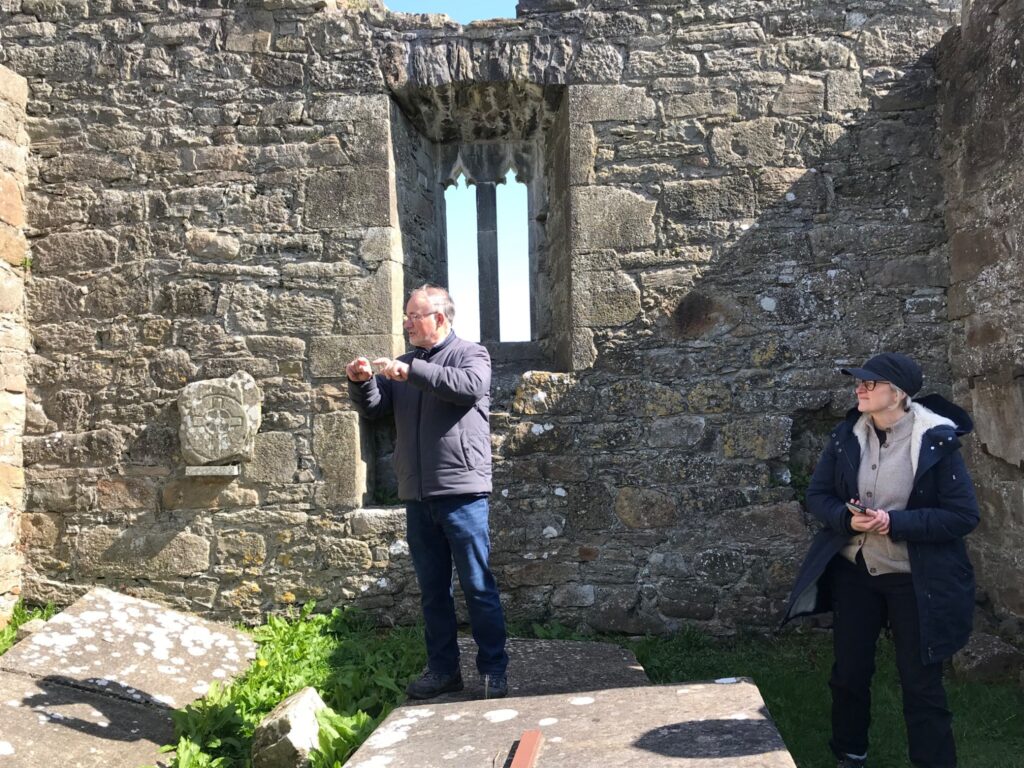
READ: Human Remains are carbon dated to early Christian period Offaly Express, Jan 21 2026.