by Helen Shaw — curator of Tóchar Stories
When we meet communities in the Midlands of Ireland and say Tóchar, and its Tóchar Stories project, are working under the Just Transition Programme in Ireland we get mixed responses.
“It’s a transition”, community volunteers Sean Craven and Seamus Barron said, when we first met in Kilcormac, Co Offaly at the beginning of the year, and added: “but it’s not a just transition — it’s just a transition”. Often people can point to infrastructure or events that have been funded locally through the programme but ask ‘what does it mean for us?”.
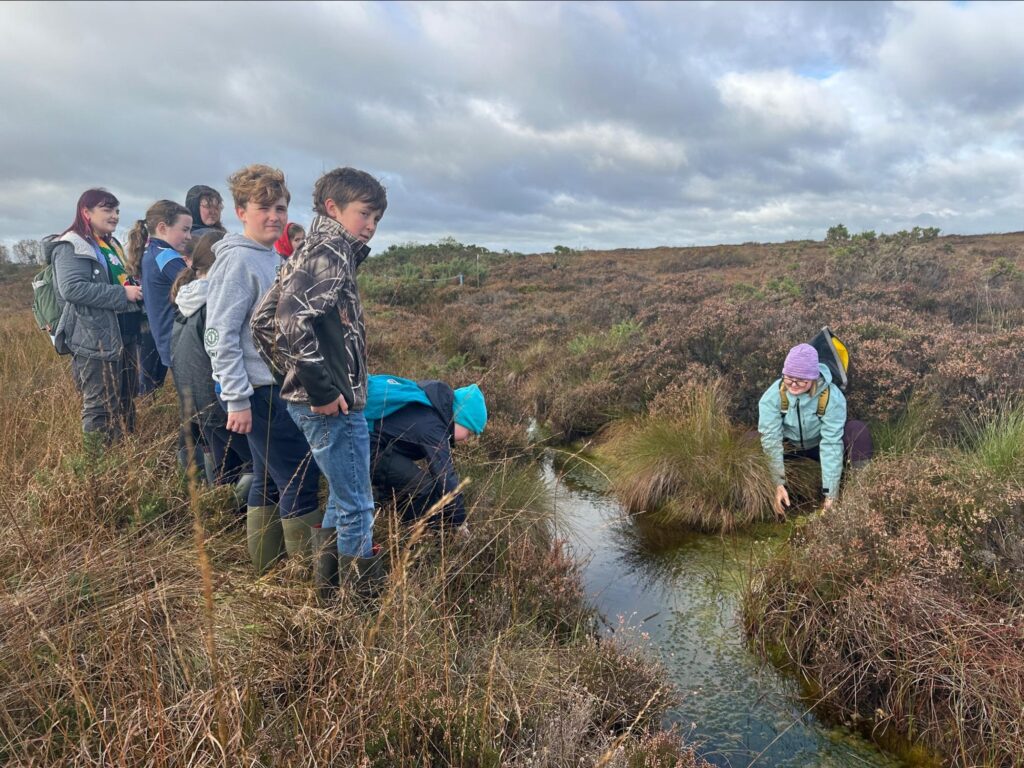
The idea of a just transition itself means no-one should be left behind in the phasing out of fossil fuels and the decarbonisation of our economies. In the Midlands the focus is on a region that has had a proud tradition of generating energy and employment through industrial peat extraction from Ireland’s ancient boglands. At its core, as an international mechanism, is the concept that a just transition means climate action +social inclusion.
It’s about seeing people, places and nature as interconnected relationships in this seismic shift to shape a sustainable, regenerative and thriving carbon neutral future for all.
So finding a just transition is more than replacement economics — it’s about seeding climate action in human rights and justice. As the former Irish President, Mary Robinson, a champion of climate justice and a member of The Elders, said a few years back we should talk about just transformations rather than just transitions in that “a truly just transition will not be just a transition — it should tackle the inequalities and injustices caused by and exacerbated by the climate crisis and lead us to a better future.” It is within that framework that we’ve been using storytelling in communities to navigate a pathway, a tóchar, from our past, through our present into a shared reimagining of our future.
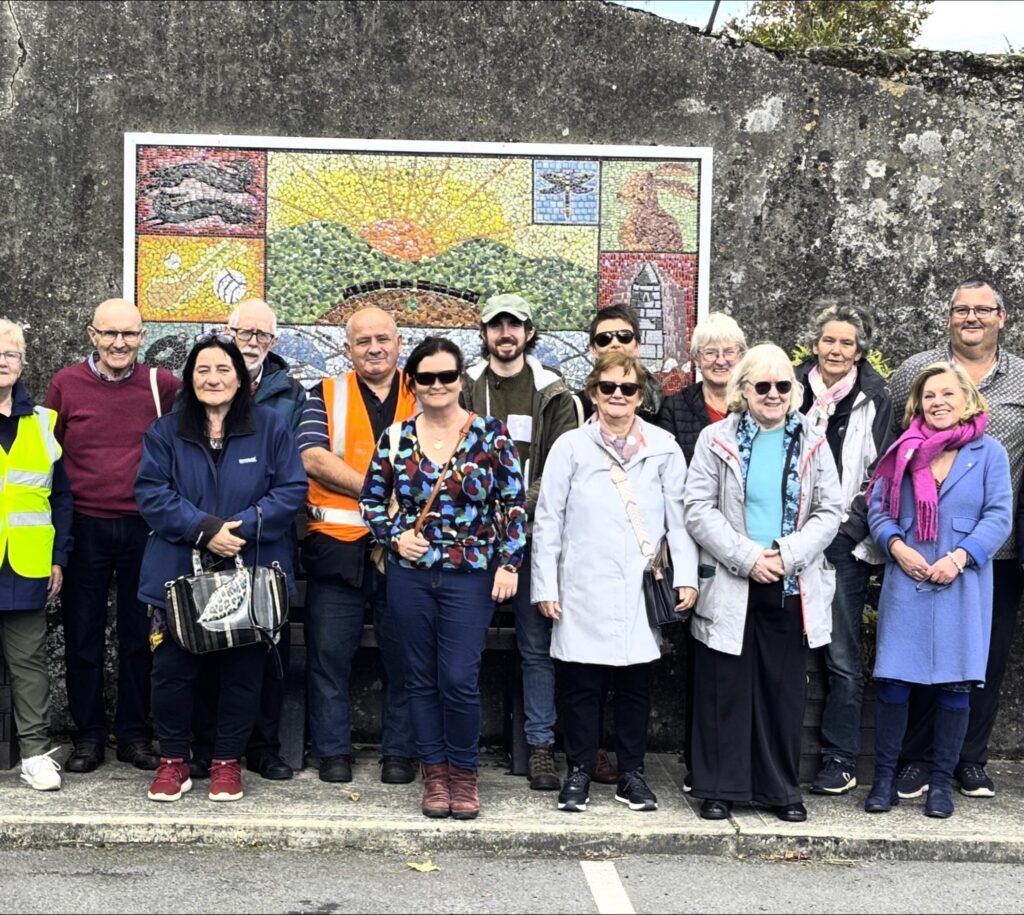
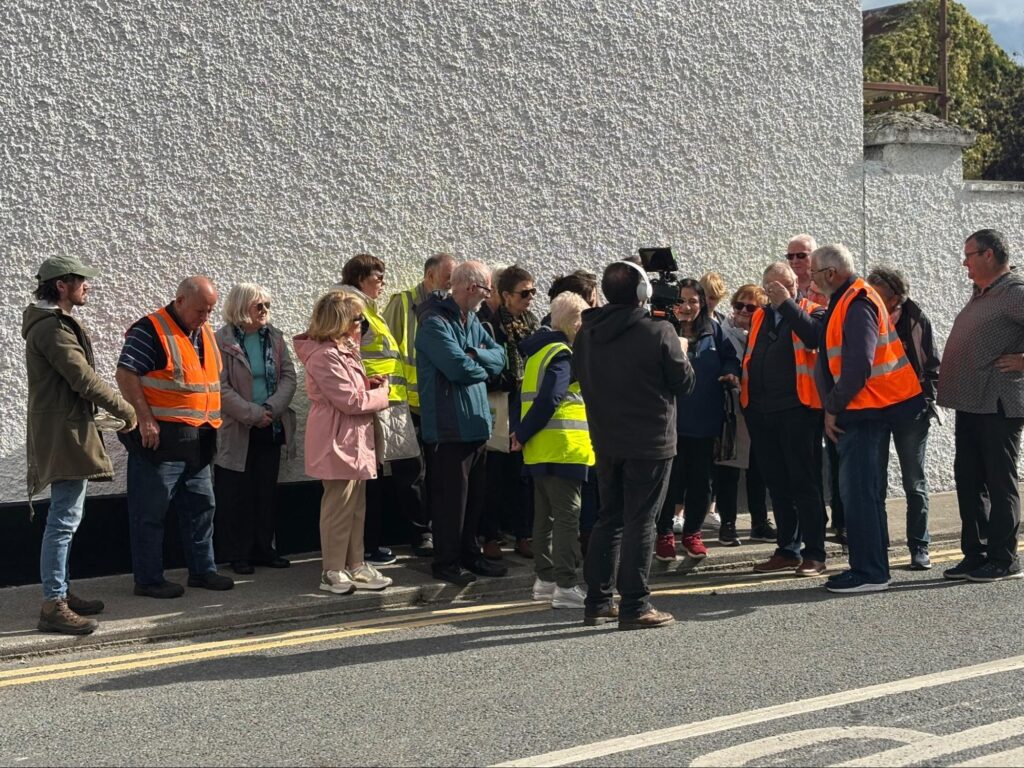
In late September we co-hosted an event ‘Sharing our Past, Imagining our Future’ to explore those ideas in Kilcormac , a place long connected to industrial peat extraction, and facilitated a conversation with the community about its changing identity, needs and voice. In partnership with the Kilcormac Development Association we brought together a community storytelling workshop around place and belonging, and to begin to name and describe what local people felt their place had lost and also what they hoped it could gain in the future. We came together to begin to reimagine the identity of a place which had for so long been defined by its thriving turf economy and its relationship with Bord na Móna (now BnM) as an employer.
Video entitled – A bird’s eye view of Kilcormac and nearby Lough Boora (Tóchar Stories). To view click here
Locals talked of a once vibrant, bustling town with thriving businesses, as people from across Ireland moved to work or set up shop there, when the Bord na Móna peat industry took off from the late 1940s. On the heritage walk afterwards they pointed to closed banks, derelict premises, locked up restaurants and hotels; a main street where retail shops suffer from a lack of footfall. We chatted with one of the mainstay retailers, Anne Coffey, a dynamic lady in her seventies, who runs Coffey’s Drapery on main street, a business her late father set up in 1947, and where Anne has worked since the 1960s. She loves her job and meeting people, likes to walk in the bogland nature park nearby, Lough Boora Discovery Park run by Bord na Móna, but sees the changes in Kilcormac itself.
“Sure it’s a great community. I mean, it’s the people that make it. Bord na Móna is a huge loss, because that’s what my father would’ve built his business on, would be Bord na Móna and all the workers that came in. The future of Kilcormac, it’s difficult to know because without employment, it’s lacking. I wouldn’t like it to be just a residential town. I like businesses in the town. I think if there’s people working in a place, it gives more sense of community” — Anne Coffey.
Video of Anne Coffey describing her love of place but marks the changes since the loss of Bord na Móna employment (Tóchar Stories): To view click here
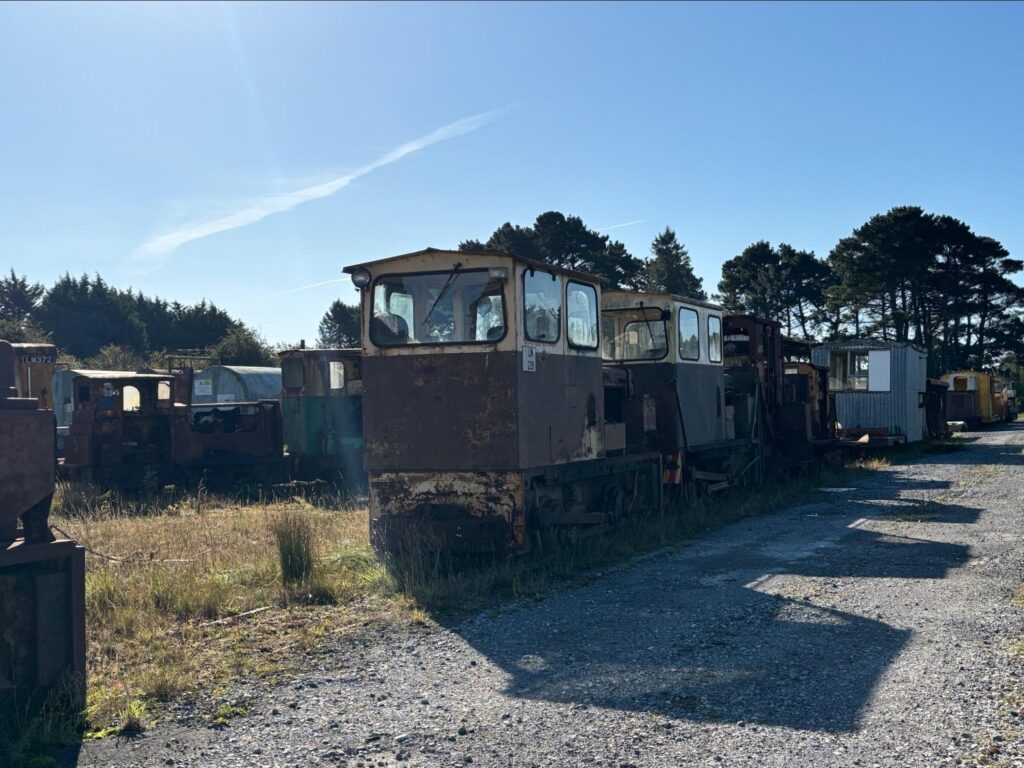
For Sean Craven, a volunteer leader with the Kilcormac Development Association and a former Bord na Móna worker himself, the sense of loss is personal. He says many of the former workers feel abandoned and forgotten — they understand the decarbonisation transition is essential and value the restoration of the bogs, but feel that their shared past, the industrial history and its story, is being erased. Sean, and his colleagues Seamus Barron and Cormac Nolan, would love to see their working lives remembered and to see the record of the industrial history from the 1940s included. For them a ‘transition’ needs to carry the heritage, culture and life stories of people and places so we know where we come from, what our roots are, as we change. They’d like to see the archives of Bord na Móna preserved, digitised and made public as a national record and for the some remnants of the peat industry machinery to be restored and included in places like Lough Boora Discovery Park — so there is a memory, a pathway from a shared past to a regenerative.
“I’d love to see that happening…That there’s some place, that while some of us are still alive, we could tell our story and pass it on” — Sean Craven.
Video of Sean Craven on his sense of place and belonging in Kilcormac and what he hopes for the future (tóchar Stories). To view click here
Decaying Bord na Móna (BnM) machinery at its old Boora workshop (Tóchar Stories)
For Sean, and many in the Kilcormac Development Association, the change has been so rapid they are still adjusting.
Bord na Móna stopped peat extraction in 2020 and said it was “the formal end to the company’s association with peat harvesting” and that, now rebranded as BnM, it was moving on to “tackle the challenges concerning climate change, energy supply, biodiversity and the circular economy.” Communities groups, like those in Kilcormac, often express the view they feel they were let go along with the peat harvesting when they would very much like to be part of meeting the new challenges and that body of work.
“Just transition”…in other countries where it worked, it was phased in terms of a number of years. What happened with Bord na Móna was — it was almost overnight. So Friday you were working, Monday you were looking for work. So there wasn’t ample opportunity to upskill people. And the thing about Bord na Móna is that there’s wonderful workers and so many skilled people able to adapt to a different process. Like there’s probably huge opportunities now in terms of retrofitting and stuff like that. So we went from loads of jobs one day and all gone the next. You know, in a small community like this, what’s missing are jobs and making the local economy turnover”. — Sean Craven.
In the Tóchar Stories and KDA workshop in Kilcormac on September 25th we first explored the stories we would like to carry forward from our shared past. Local people named meitheal — that powerful sense of community in Ireland where volunteerism underscores action, where people come together to help each other. They talked about Kilcormac’s ancient archeological heritage, of St Cormac himself, the once vital milling trade that showed industry, enterprise and innovation long before Bord na Móna, the tradition of crafts, of the rambling house storytelling tradition, where people came together in an evening, they remembered the magic of fair days and how the dance floor in the Fiesta Hall when it was a ‘ballroom of romance’ was Maple all the way from Canada.
The Fiesta Hall, with its echoes of music, big bands and romance paid idle for years but has now been restored, using green building methods, as a new community enterprise and cultural hub, under the Offaly Local Development Company, and frames that pathway from past to future.
Video of the Fiesta Hall stop as captured on the community walkabout in Kilcormac. To view click here
When we imagined the future, we went beyond the losses and the described stripping out of the place in recent years, and began to connect the past with future potential. What if that milling industry history and heritage could point us to new enterprises for food or regenerative agriculture, what if hemp crops, for a biomaterial like hempcrete, could see local land used to build carbon neutral homes? What if reimagined tourism made Kilcormac a destination rather than a drive-through, for its history, heritage, archaeology as well as its wildlife and nature? What if we began to see and promote Kilcormac and its surrounding region as an ideal place for remote working, or green entrepreneurship, attracting young families to come and set up home — just as others did from the late 1940s? What if we began to see the challenge as an opportunity?
Imagining needs practical enabling.
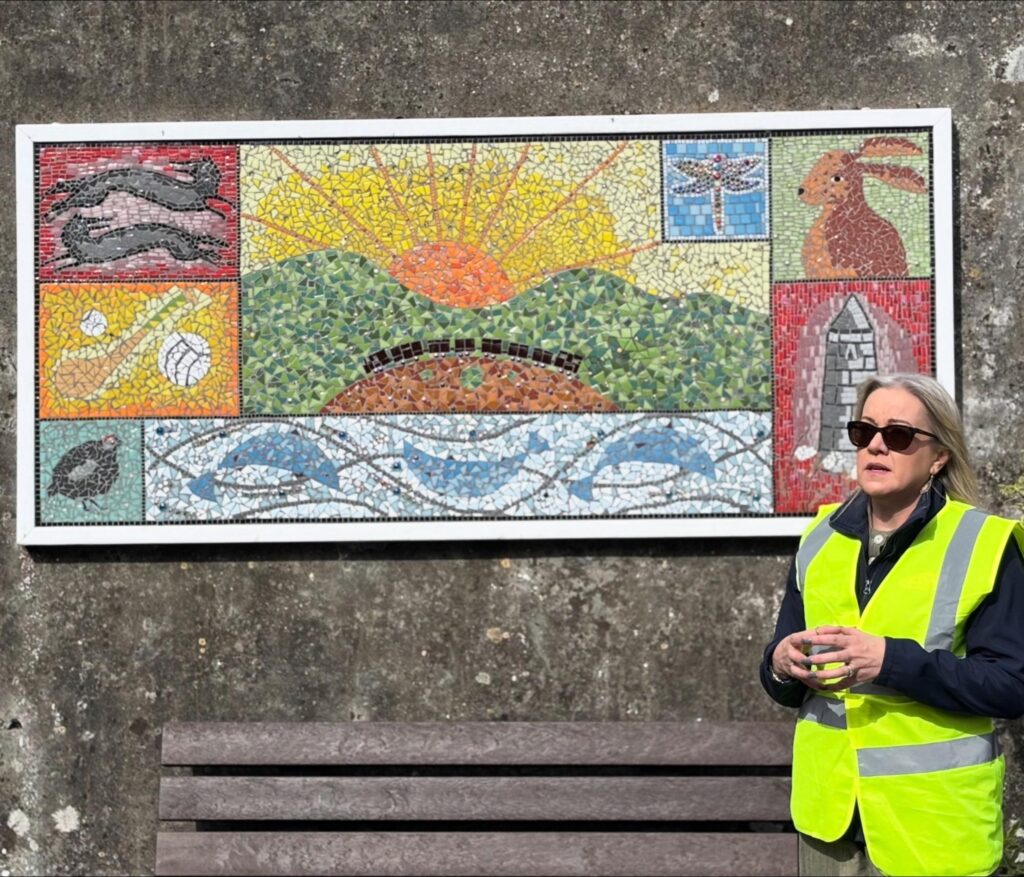
For Anne and Sean, and Linda Kelly at the KDA, there’s often a question of connecting the dots and putting in the infrastructure to let the community thrive and become as it’s already called ‘The Gateway to Lough Boora’. Kilcormac is an ideal place to imagine a bike hire hub, a cafe where you could get a tasty packed lunch, and take a family cycle to enjoy the Lough Boora nature park, with its birdlife and art sculpture walkway. The problem is the road up from Kilcormac is not safe for walkers or cyclists — it’s a single car road. What they need, the community says, is a safe access way to both Lough Boora ( just over 2 kilometres up the road) with low speeds to the entrance to the park, with a designated cycling and pedestrian path, connecting not just to Lough Boora but to the new Greenway along the Canal; being delivered with significant public investment. Sometimes a road can connect potential and show how a bike hub business and a cafe could become viable — providing jobs but also that idea of Kilcormac as a destination with footfall for shops.
The Just Transition Commission has been established to support a more holistic socio-economic climate and energy transition. Ali Sheridan, the Commission’s Chair, wrote, in its first report, that we in Ireland “have a huge opportunity now to not only approach just transition as a process to manage the potential negative impacts of the climate transition, but as a wider lens to inform a new vision for Ireland. To look beyond solely emission reductions towards transforming our society and economy to thrive while meeting social needs and respecting planetary boundaries”.
That ‘wider lens’ of envisioning a society and economy where people, places and nature thrives takes imagination but it’s an imaginative process that is empowered by memory and shared stories, by meitheal and participation. We can’t begin to imagine a better, shared future for all until we first come together and understand who we are, how we got here and what we value.
We build then upon foundations of solidarity where it’s not only about ‘leaving no-one behind’ but where everyone is invited to become part of the design team.
*******
Tóchar Stories will be co-hosting another community storytelling event in Carbury, Co Kildare in late January – if you and your community are in the Midlands and close to bogs, fens and wetlands and would like to know more about Tóchar Stories and its work contact Helen on tocharstories (@) gmail (dot) com. A version of this story by Helen was published on Medium on November 25th 2025. Follow the work on Instagram @tocharstories