By Helen Shaw Tóchar Stories
“It’s a very, very special place to live”, Margaret O’Neill tells me when we chat. “I hope it never loses that, you know, the friendliness, the neighbourly feeling of people helping each other out, I hope it never loses that.” We are in the community orchard and gardens in Cloontuskert, a small village close to the River Shannon in County Roscommon. Lanesborough, across the Shannon in County Longford is just minutes away. There are ripe apple and plum trees behind us and a polytunnel promises tomatoes, spinach, scallions and lettuce.
WATCH: Three Generations of O’Neills in Cloontuskert
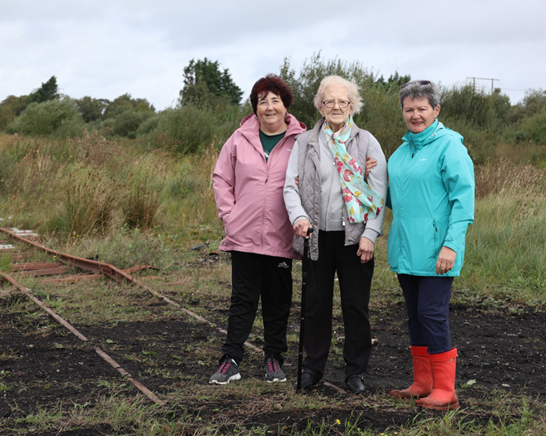
Margaret moved here in the late 1980s, to this horse-shoe of houses in a picturesque Bord na Móna workers estate, when she married local man, James O’Neill. James, like Margaret’s own father, worked for Bord na Móna. His parents Tommy and Elizabeth O’Neill were amongst the first residents in the Cloontuskert estate when they moved, in the 1950s, from Wexford. Tommy answered a Bord na Móna advert in the Sunday Independent promising not just a job – but a home.
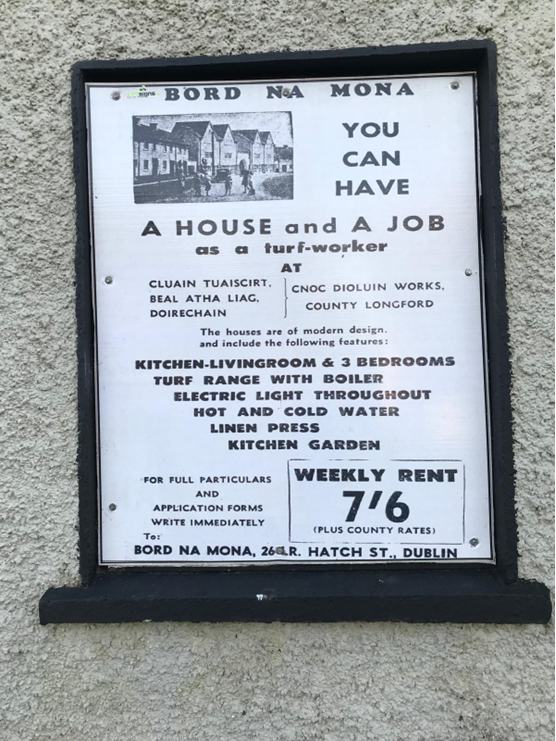
“He answered the advertisement just saying there was a job, house, everything going, for a job with Bord na Móna, working with the turf. Yeah, he was delighted. We didn’t know whether we’d like the place or not at first, but when we came here, we did like it. Because there was a range in the house, and the turf, we had plenty”, Elizabeth remembers. She is 90 next birthday but still active in everything to do with the community.
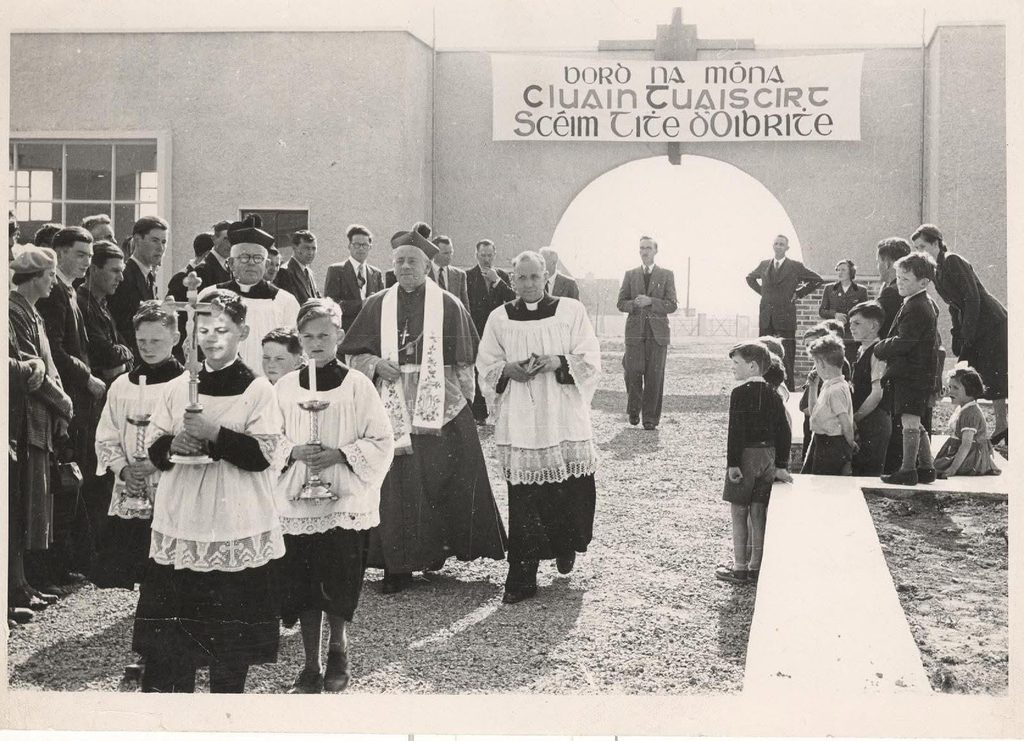
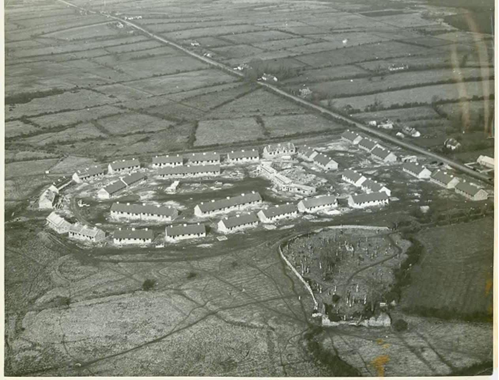
There’s a remarkable photo of the blessing of the Cloontuskert workers estate in 1953 with S.C. (Todd) Andrews standing in the archway. Seven workers estates were designed by architect Frank Gibney in Kilcormac (Offaly) Bracknagh (Offaly) Rochfortbridge (Westmeath) Lanesborough (Longford) Derraghan (Longford) Timahoe (Kildare) – with Cloontuskert the only one in Roscommon. The houses were designed to burn turf as the energy source for heating and cooking and had community facilities within the estates.
“There’s great heritage behind it all” says Margaret. “With all the people that came from all over, from different counties, and settled here”. Margaret and her late husband James were dedicated volunteers in the village – particularly through Tidy Towns. Margaret, and Elizabeth are still actively involved and Margaret’s daughter Shauna O’Neill carries on the tradition.
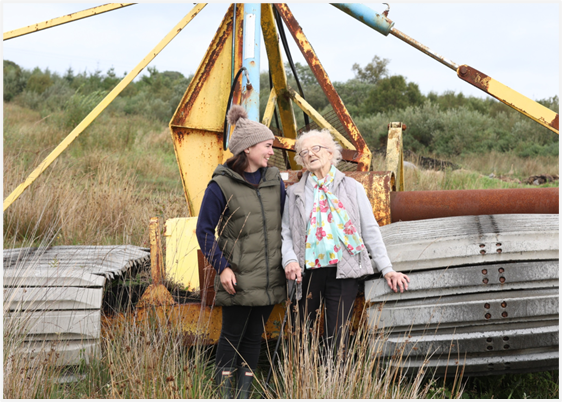
Shauna is Chair of Cloontuskert Development and Tidy Towns Association and it has been instrumental in taking care of the village, its Bord na Móna legacy, history and built heritage, and enabling the community to adapt to changing times. “Cloontuskert is actually one of the longest standing entrants in the Tidy Towns competition nationwide. Our first entry was in 1960”, Shauna says.
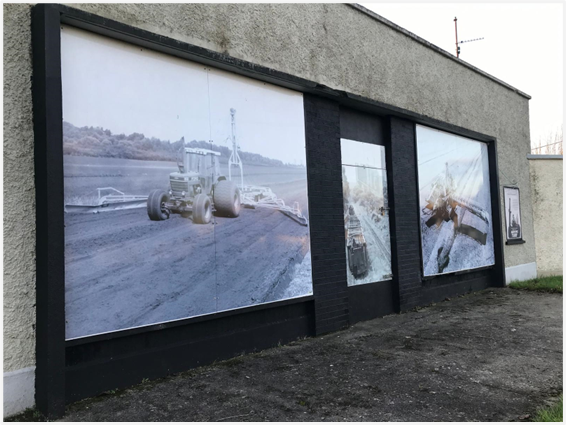
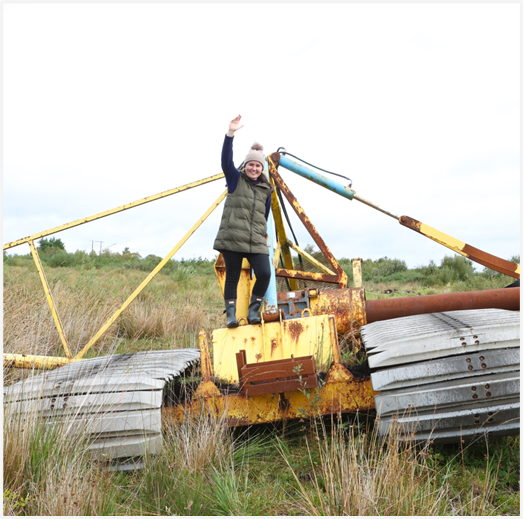
Cloontuskert’s identity and sense of place is rooted in Bord na Móna and the bog that surrounds it. Just beyond the houses is a trackway to a bog where there is still abandoned Bord na Móna machinery and the old tea room for workers. Shauna, who is a physics and maths secondary school teacher in Roscommon CBS, spent her summers working there. “I did 5 summers with Bord na Móna and loved every single second of it”, she says. She was studying nanoscience at Trinity College Dublin so days on the bog were a great release from academia.
In 2021, with the formal cessation of industrial turf extraction, Shauna and the Tidy Towns group applied for the Reimagine Placemaking project with the Irish Architecture Foundation. They met 12th Field architects David Jameson and Evelyn D’Arcy who were interested in the Frank Gibney legacy. But the stories of the peatland communities and the massive cultural, economic and social transition they were facing captivated the two architects and eventually led to the creation of Bog Bothy – a space to reimagine our relationship with the bog. “The Bog Bothy came from this idea of bringing people back into a landscape that they now felt disconnected from, “ Evelyn explains. “It is very much a neutral space for people to spend time in and to just generally talk through the process of, of that huge transition from workplace into what will become a new type of landscape to exist in.”
WATCH: The Story of Bog Bothy with David Jameson and Evelyn D’Arcy
By mid August this year 12th Field and Cloontuskert Tidy Towns completed the circle that began in 2021 when Bog Bothy was installed in the common gardens behind the estate. The bright yellow and blue wooden hut completed its summer 2026 tour in Cloontuskert with the community that had inspired it. For Shauna it underscores the importance of listening to people on the ground and their ideas for the future. “I think to include people in the decision-making is really, really important. There is a huge appreciation locally of the need for the rewetting and all that goes along with that, but people should definitely still be at the centre in the same way that they were at the centre of the many decades of work and family life that led to this entire story, which is a big national story. So it is just magnificent to see the Bog Bothy come home to Cloontuskert”.
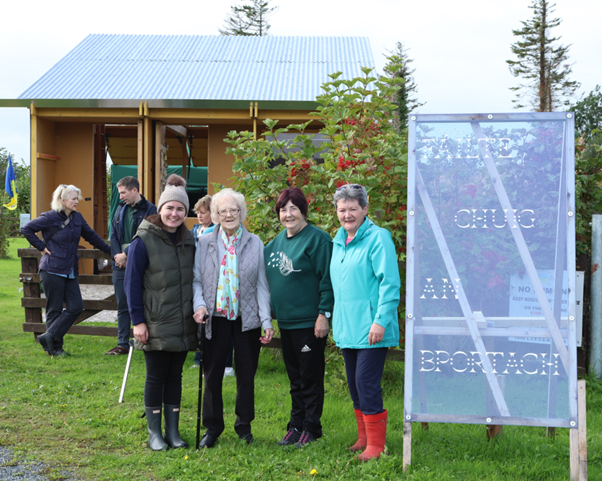
While Cloontuskert, like all the Gibney estates, was cutting edge innovation in its day in designing homes that could be fuelled by turf today that needs reimagining. Shauna and another Cloontuskert native, architect Tracey Connaughton, have led in retrofitting many of the homes to sustainable energy in partnership with Bord na Móna and SEAI. “It is definitely an awful lot easier. It means now that we don’t have to save turf anymore. You have hot water, just turn the tap, you have hot water straight away,” says Margaret “so it’s the way to go into the future”.
Bog Bothy closes its shutters on September 27th in Cloontuskert after a busy schedule of events involving talks, workshops, music, walks and even yoga. “It’s absolutely brilliant”, Elizabeth. For Shauna it has been a chance to consolidate the community, connect with neighbouring villages and look to the future. They would like a boardwalk allowing more public access in the rewetted bog so people could enjoy the nature that is returning to the once industrial landscape. And if they want a permanent bog bothy – they do not have to look far as the original workers’ tea hut remains on the land.