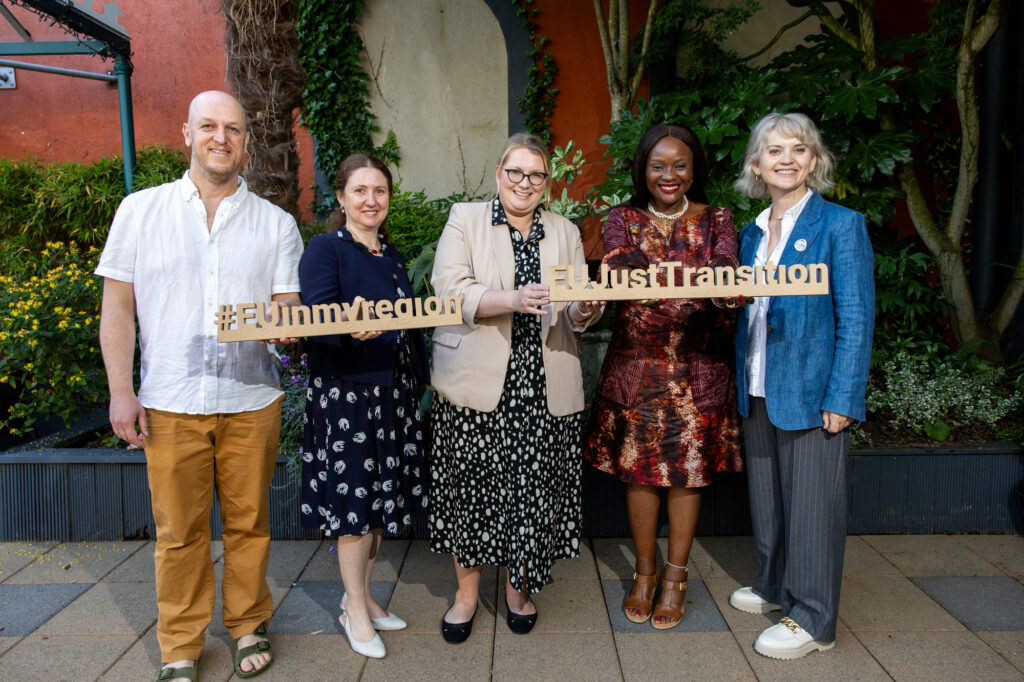
- Visit by Dr Musonda Mumba, Secretary General of the Convention on Wetlands, highlights the global importance of Ireland’s wetlands
- Tóchar Midlands Wetland Restoration project shows how international wetlands commitments are being delivered on the ground in Ireland
Tuesday, 23 June 2026, Ireland: The Irish Ramsar Wetlands Committee (IRWC), which works to assist Ireland in meeting its requirements as a signatory to the International Convention on Wetlands (Ramsar Convention), today brought together national and international voices on wetland protection and restoration at the Voices and Vision for Ireland’s Wetlands conference in Laois, delivered in partnership with Tóchar Midlands Wetland Restoration.
The conference takes place amid growing concern about the condition of wetlands globally, including in Ireland. Ireland has 45 Wetlands of International Importance (Ramsar Sites), all of which are recognised internationally for their importance to nature. However, decades of drainage and land use change, amongst other factors have significantly reduced the capacity of many Irish wetlands to store carbon, regulate water and support wildlife, underscoring the pressing need for rehabilitation.
Despite these challenges, the IRWC also highlighted sites and communities that are helping to turn the tide including Cloncrow Bog Natural Heritage Area in Co. Westmeath, where Active Raised Bog is regenerating following successful restoration works led by the National Parks and Wildlife Service. It is one example of the growing body of restoration work underway across Ireland. The IRWC emphasised the need to build on this progress through coordinated national action.
Minister of State for Nature, Heritage and Biodiversity, Christopher O’Sullivan TD, said:
“Wetlands are a major part of the solution to today’s environmental challenges and restoring them is a priority in terms of my approach to restoring nature. Healthy wetlands improve the quality of our water, reduce flood risk, sequester carbon and protect rare species of birds and wildlife, all of which are vitally important ecosystem services that support communities, farming and fisheries across the country.”
Initiatives like the Tochár programme are doing amazing work to show how targeted restoration actions can transform these habitats. As work continues to finalise Ireland’s national Nature Restoration Plan, I want to ensure that it helps us scale up and accelerate efforts for our wetlands, in collaboration with landowners and local people for the benefit of both the environment and society.”
The conference takes place during a visit to Ireland by Dr Musonda Mumba, Secretary General of the Convention on Wetlands, reflecting the growing international focus on Ireland’s wetlands and their global importance. The Convention on Wetlands was adopted in 1971 making it one of the earliest global environmental agreements. It was established in response to the growing recognition of the rapid loss of wetlands worldwide and their critical ecological role, motivations that still resonate today.
Dr Musonda Mumba, Secretary General of the Convention on Wetlands speaking about Ireland’s wetlands said:
“I have seen what happens when wetlands disappear, and what becomes possible when people decide to bring them back. That second story is the one I came here to learn more about. Ireland’s wetlands matter far beyond Ireland, and the willingness here to get government, communities and scientists working together, and to keep them at it, is where real progress comes from. We have a genuine chance now to put wetlands at the centre of climate, biodiversity and water policy, before the damage is done.”
The IRWC said the discussions taking place today will help shape how Ireland integrates wetlands into future sectoral policies. Ireland holds a significant share of Europe’s remaining peatlands, making decisions taken here important not only nationally but internationally.
Fernando Fernandez, Chair of the Irish Ramsar Wetlands Committee, said:
“Ireland’s wetlands are among our most important natural assets, but they are under real and increasing pressure. The science is clear restoring wetlands is one of the most effective actions we can take to address climate change, biodiversity loss and water management together. The focus now must be on moving from awareness to coordinated national action.”
As part of the wider programme, international delegates will also visit Tóchar wetland sites across the Midlands, showcasing both the scale of degradation and the growing number of restoration and community-led initiatives underway.
Shirley Clerkin, Tóchar Project Manager, said:
“Tóchar reflects how global ambitions under the Convention on Wetlands can be delivered meaningfully at a local level. Across the Midlands, we are working with communities, partners and landowners to restore wetlands in ways that support biodiversity, climate action and sustainable livelihoods. We are asking people to tell us the stories of their relationships with wetlands and their hopes for the future in this special landscape. From Pollardstown Fen and Clara Bog to the Slieve Blooms, this work demonstrates how international policy translates into real, place-based environmental and social change.”
The Tóchar project also reflects a strong emphasis on community engagement and a just transition aligning with key Convention principles around local knowledge and participation. Through unexpected partnerships and community-led initiatives, the project is helping to make wetlands more visible, accessible and relevant to the people who live alongside them. Tóchar is one of the largest restoration projects currently underway. It is a three-year, €12 million wetlands restoration project co-funded by the Government of Ireland and the European Union through the EU Just Transition Fund Programme. The project is coordinated by the National Parks and Wildlife Service.
The Irish Ramsar Wetlands Committee said the moment represents a clear opportunity to reposition wetlands as a central pillar of Ireland’s environmental and land use strategy, at a time when nature-based solutions are becoming increasingly critical.
For more information visit www.irishwetlands.ie or www.tocharwetlands.ie or follow along on social media on Instagram @wetlandsrestoration or Facebook and LinkedIn @TócharWetlandsRestoration.
ENDS
For all media queries or to arrange an interview with a spokesperson, please contact:
Marie Lynch, Account Director, Carr Communications, marie@carrcommunications.ie, 087 973 0522.
About The Irish Ramsar Wetlands Committee
The Irish Ramsar Wetlands Committee was set up by the Government to assist Ireland in meeting its requirements as a signatory to the Convention on Wetlands. It is a widely representative group, set up to assist in the protection, appreciation and understanding of wetlands in Ireland and to promote the implementation of the Convention on Wetlands. They can be contacted on Bluesky @ramsar-ireland.bsky.social.
About the Tóchar Project www.tocharwetlands.ie
The name Tóchar represents the path along the Just Transition journey and serves as a reminder that generations before us have used and experienced bogs and wetlands in many ways. A tóchar or togher is a path through a bog or wetland, and hundreds of these ancient pathways have been discovered deep within the peatlands of Ireland. Some were made from heavy oak transported over long distances, while others were constructed using different tree species or even flagstones.
Tóchar is implementing Action 2.1 of the EU Just Transition Programme in Ireland, focusing on restoring degraded wetlands as part of a broader movement towards carbon neutrality. This project co-funded by the EU and the National Parks and Wildlife Service, recognises that nature restoration is a social transition, where restoring landscapes goes hand in hand with strengthening communities and reconnecting people with their natural heritage.
EU Just Transition Fund
The purpose of the EU Just Transition Fund (EUJTF), co-funded by the Government of Ireland and the European Union, is to assist the territories most affected by the transition to a climate-neutral economy. In Ireland, this focuses on the wider Midlands region, where there have been direct impacts from the move away from peat production and electricity generation from peat. Up to €169 million, using Exchequer and EU resources, will be available in the Fund to facilitate a just transition towards a low-carbon economy in the Midlands. By providing opportunities for employment in the Territory, the EU JTF can help to create an inclusive, attractive, healthy and sustainable place to live, work and visit.
The programme priorities of the EU JTF are as follows:
- Generating employment for communities formerly reliant on peat production by investing in the diversification of the local economy.
- Supporting the restoration, regeneration and repurposing of peatlands and related land.
- Providing communities in the wider Midlands with smart and sustainable mobility options to enable them to benefit directly from the green transition.
The Eastern and Midland Regional Assembly (EMRA) are the Managing Authority for Ireland’s EU Just Transition Fund Programme. Further information, including programme documentation, and links to information about open and future funding calls, is available on the EMRA website (www.emra.ie/eu-jtf/).
Ramsar Convention:
The Convention on Wetlands (Ramsar Convention) is the intergovernmental treaty that provides the framework for the conservation and wise use of wetlands and their resources. Further details are available at: https://www.ramsar.org/
Dr. Musonda Mumba is the Secretary General of the Ramsar Convention on Wetlands, based in Switzerland. She has over 25 years of experience in the environment and conservation fields.