Wednesday, 11 March 2026, Ireland: People from across Laois and Offaly gathered in recent weeks to learn about the restoration of Ireland’s rare fen wetlands, as part of a series of public information evenings organised by Tóchar Midlands Wetland Restoration.
The events, held at the Killeshin Hotel in Portlaoise and the County Arms Hotel in Birr, brought together landowners, farmers, community groups and residents interested in the future of wetlands across the Midlands. In total, 80 people attended the two evenings.
The sessions explored how fens function and why restoration work is now underway across the region. Fens are a distinctive type of peatland fed by groundwater rather than rainfall and support specialised plants, wildlife and important ecosystem functions.
The evenings also outlined the scale of restoration currently being examined across the Midlands, where the project is assessing 36 fen sites covering approximately 1,472 hectares of habitat.
Presentations highlighted how restoration planning involves hydrological modelling, ecological surveys and drainage mapping to determine the most appropriate actions for each site. Landowners were able to talk to the team directly about their fen locations by viewing on the bespoke digital mapping system how their land intersects with these wetlands.
Shirley Clerkin, Project Manager for Tóchar Midlands Wetland Restoration, said the strong turnout reflected growing interest in wetlands and their role in local landscapes: “It was hugely encouraging to see such engagement from communities in Laois and Offaly and to be able to respond to queries about fens with landowners and others. These evenings allow us to explain the importance of wetlands in the landscape, what fen restoration involves, share the science behind it and hear directly from people living and working near these wonderful places. . Restoring wetlands is about working with communities as well as restoring nature. I’d like to thank everyone for attending, giving their time to meet with us and sharing their knowledge.”
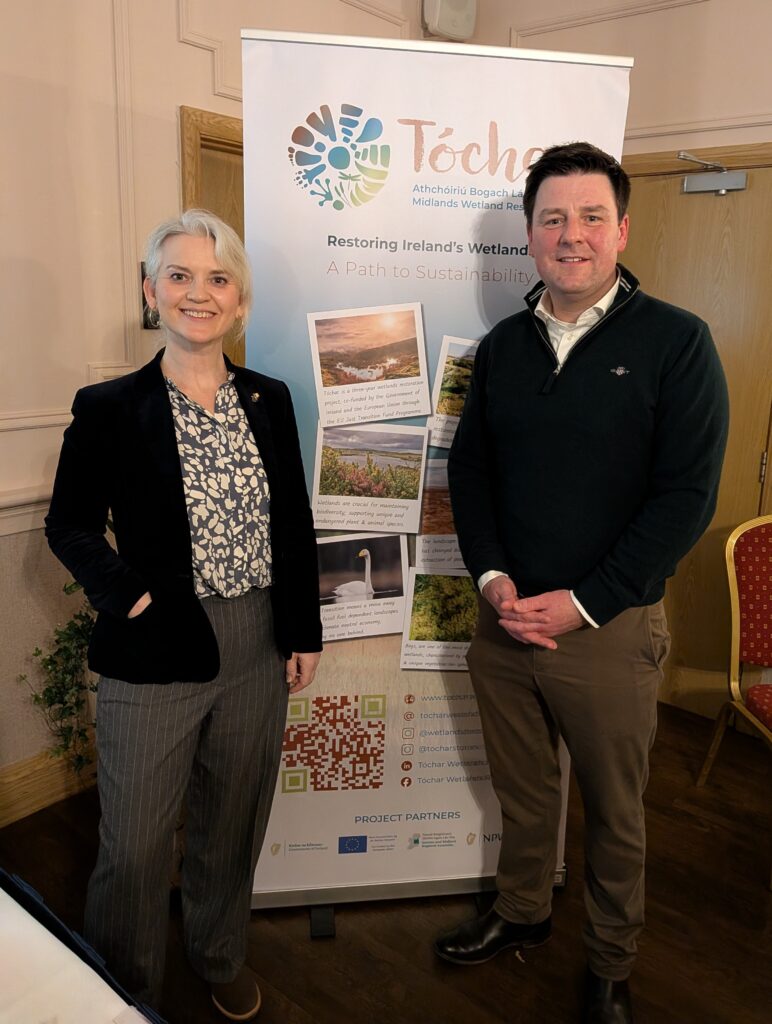
Speakers also discussed several fen sites across the region including Clonaslee Eskers and Derry Bog SAC, Kilnaseer SAC, Mannin and Annaghmore Lough Fen, highlighting how restoration opportunities vary depending on local ecological and hydrological conditions.
Technical experts from Arup, who are supporting delivery of the fen restoration programme, outlined the hydrological processes that underpin these habitats.
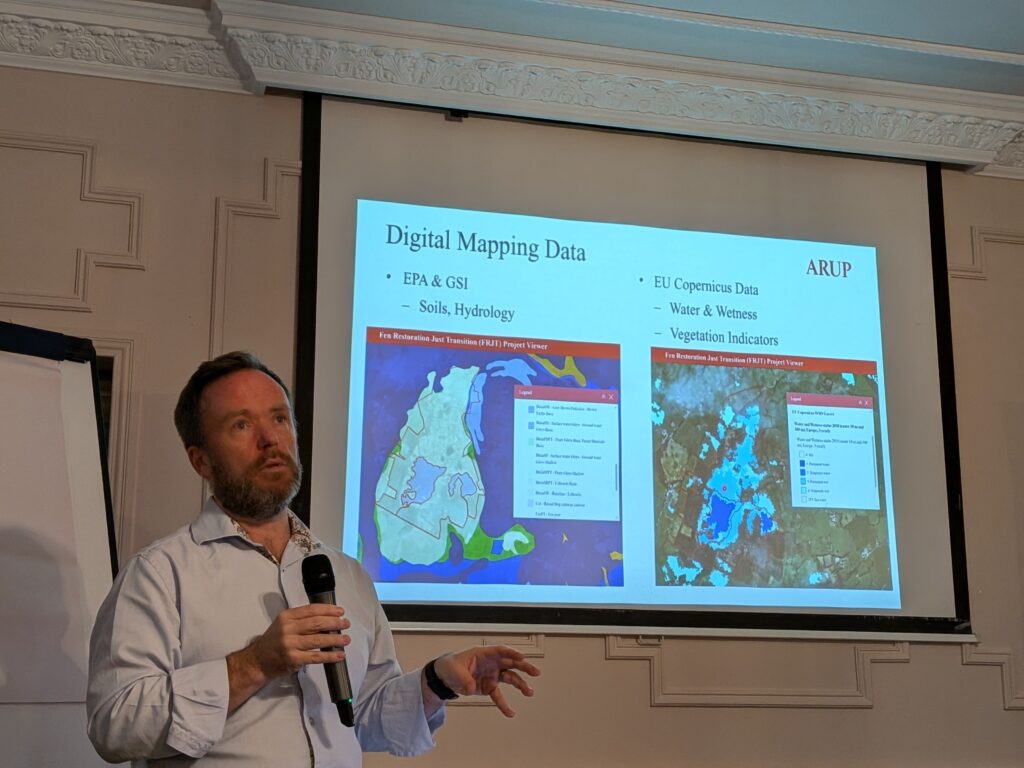
Gerry Baker, a hydrologist working on the fen restoration project from Arup explained: “Our role on the projects is to provide the multi-disciplinary technical expertise needed to ensure the successful restoration of these critical wetland sites. We are applying a rigorous, evidence-based approach to the hydrological and ecological assessments, which is essential for developing effective, long-term restoration measures. This initiative aligns perfectly with our commitment to sustainable development and leveraging our engineering and environmental consulting skills to address key climate and biodiversity challenges.”
Experts also highlighted how wetlands can benefit communities by helping regulate water across the landscape, slowing runoff, reducing peak flows during heavy rainfall and supporting water availability during dry periods.
The events provided information for landowners interested in participating in restoration initiatives. Participation in restoration measures is entirely voluntary and fully funded. In addition, financial incentives are available through the Tóchar Midlands Wetland Restoration Incentive Scheme. The scheme offers once-off payments of €1,450 per hectare, with payments ranging from €725 to €15,000 depending on the size of the area involved.
The public information evenings form part of wider engagement taking place across the Midlands as the three-year €12 million Tóchar Midlands Wetland Restoration project progresses.
The project is co-funded by the Government of Ireland and the European Union through the EU Just Transition Fund Programme and is managed by the National Parks and Wildlife Service within the Department of Housing, Local Government and Heritage.
To learn more about the Tóchar Project, share your views, sign up to our newsletter or participate in upcoming initiatives, visit www.tocharwetlands.ie or follow us on Instagram @wetlandsrestoration or Facebook and LinkedIn Tóchar Wetlands Restoration.